本課程獲醫務化驗師管理委員會認可,畢業生可註冊成為醫務化驗師(第II部分)。


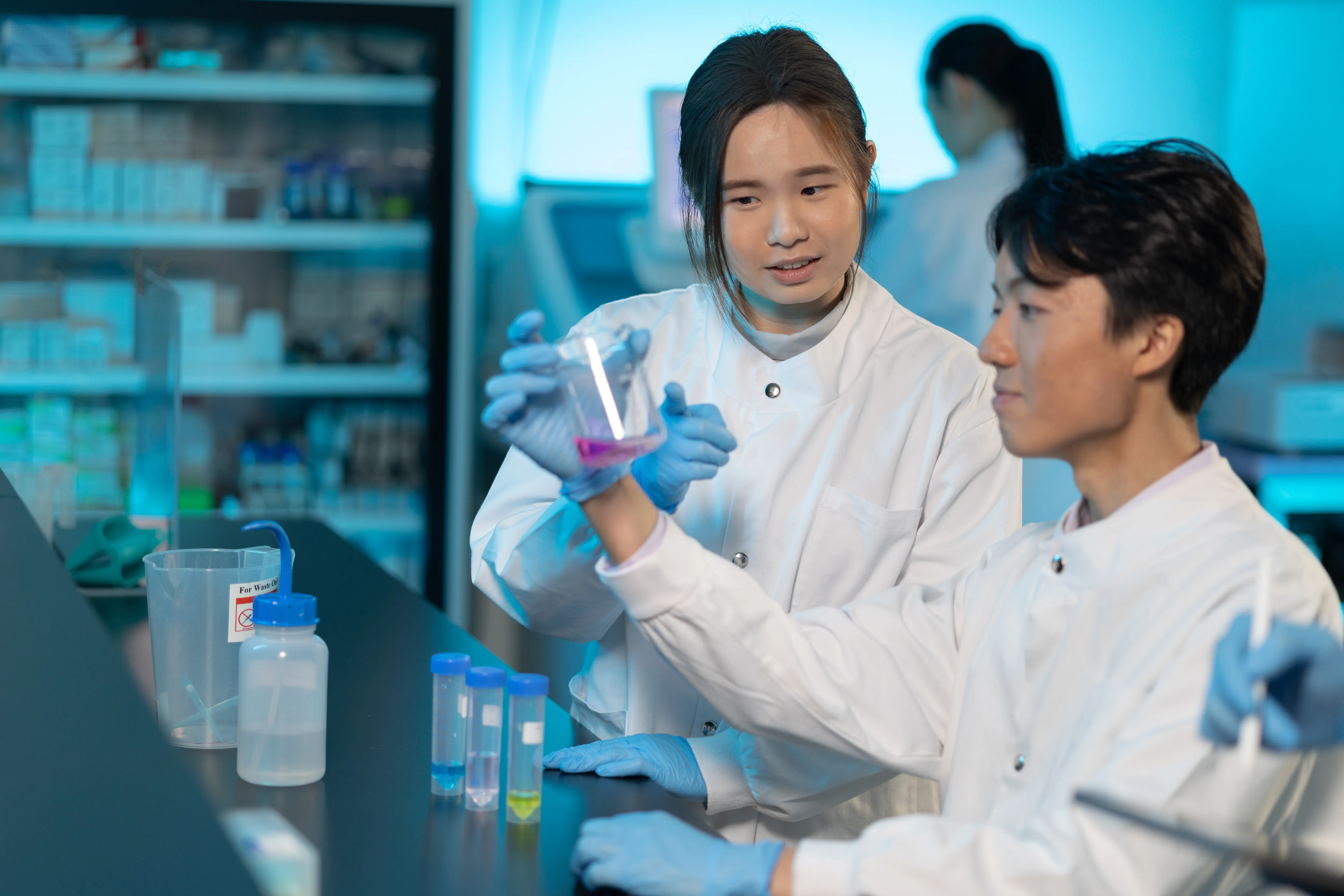
醫療化驗科學(榮譽)理學學士
課程簡介
首年學習聚焦基礎科學知識、語言發展及通識教育。由第二年起,學生深入掌握醫療化驗科學四大範疇的理論與實踐,包括解剖及細胞病理學、化學病理學、血液及輸血科學,以及臨床微生物學及病毒學。學生亦於會獲安排於第四年首學期在公立或私家醫院的病理實驗室或私營醫學化驗室進行至少200小時臨床實習,助他們可以無縫接軌職場,提升專業競爭力和就業準備。
課程目標
- To develop students’ competence in medical testing with wide knowledge base in the application of analytical science in medicine.
- To equip the student with critical and analytical thinking skills for solving complex clinical problems in laboratory medicine.
- To prepare the student to be an effective and efficient healthcare practitioner for participation in contemporary clinical care paths.
修讀模式
| 修讀模式 | |
|---|---|
| 教學語言 | 英語 |
| 總學分數目 | 135 學分 |
| 聯招課程編號 | JSST02 |
HKDSE applicants should submit applications through the Joint University Programmes Admissions System (JUPAS). There are NO self-financing places for this programme.
課程主任
林梓軒博士
- PhD, The University of Hong Kong, HK
- Registered Medical Laboratory Technologist (Part I), HK
- Member of Hong Kong Society for Microbiology and Infection (HKSMI)
- Member of Hong Kong Society for Molecular Diagnostic Sciences (HKSMDS)
資歷架構
| 資歷架構 | |
|---|---|
| 資歷架構級別 | 5 |
| 資歷名冊登記號碼 | 17/000003/L5 |
| 登記有效期 | 01/09/2017 至 31/08/2027 |
Language Courses
| Language Courses |
|---|
| Advanced English Writing Skills |
| English for Healthcare Professionals |
| Applied Chinese Language (or Basic Chinese*) |
| Enhancing Academic English Skills |
| Developing English Language Skills |
* Alternate Chinese course for “non-Chinese speaking” students only
Discipline Courses
| Discipline Courses |
|---|
| Ageing and Diseases |
| Human Anatomy |
| Basic Laboratory Techniques and Instrumentation |
| Human Genetics |
| Biochemistry |
| Human Physiology |
| Clinical Immunology |
| Infectious Disease and Control |
| Clinical Laboratory Cellular Pathology |
| Introduction to Chinese Medicine |
| Clinical Laboratory Chemistry and Immunochemistry |
| Introduction to Health Informatics |
| Clinical Laboratory Haematology and Transfusion Science |
| Introduction to Physics |
| Clinical Laboratory Medical Microbiology |
| Molecular Diagnosis of Human Diseases |
| Clinical Practicum I (Clinical Chemistry) |
| Molecules, Cells and Genes |
| Clinical Practicum II (Haematology and Transfusion Science) |
| Pathophysiology |
| Clinical Practicum III (Anatomical and Cellular Pathology) |
| Pharmacology |
| Clinical Practicum IV (Medical Microbiology) |
| Principles of Molecular Diagnostics |
| Ethical & Legal Aspects in Health Care |
| Psychosocial Dimensions of Health and Illness |
| General Microbiology and Immunology |
| Research Methods in Biomedical Science |
| General Pathology |
| Virology |
| Honours Year Project in Medical Laboratory Science |
General Education (GE) Courses
| General Education (GE) Courses |
|---|
| Information Technology and Multimedia Application |
| The Development and Operation of Non-profit Organizations |
| Introduction to Statistics |
| Understanding and Motivating Self |
Remarks: The programme structure listed above is for reference only. For details, please consult the School concerned or refer to the Programme Definitive Document.
一年級入學
For Year 1 entry, applicants should meet one of the following requirements:
- HKDSE candidates from 2024/25 onwards, have obtained Level 3 for Chinese Language and English Language and Level 2 for Mathematics and have “Attained (A)” for Citizenship and Social Development plus one Elective/Applied Learning Subject at Level 2 (“332A+2”) in HKDSE; OR
- HKDSE candidates before 2024/2025, have obtained Level 3 for Chinese Language and English Language and Level 2 for Mathematics and Liberal Studies plus one Elective/Applied Learning Subject at Level 2 (“3322+2”) in HKDSE; OR
- Have passes in AS Use of English and AS Chinese Language and Culture plus one AL subject/two AS subjects in HKALE and Level 2 for Chinese Language and English Language plus passes in three other subjects in HKCEE; OR
- Have obtained the International Baccalaureate (IB) Diploma with a minimum score of 24 and fulfilled the English language requirements:
- English A: Language and Literature (Higher or Standard Level) – Grade 4; or
- English A: Literature (Higher or Standard Level) – Grade 4; or
- English B (Higher Level) – Grade 4; or
- English B (Standard Level) – Grade 5; or
- English Literature and Performance (Standard Level) – Grade 4; or
- English Text and Performance (Standard Level) – Grade 4; OR
- Have met the 2nd cut-off line(1) of the respective province for admission to mainland key universities in the National College Entrance Examination (Gaokao) / Joint Entrance Examination for Universities in PRC (JEE, PRC) and the scores of English Language is over 100 (全國普通高等學校招生入學考試(內地高考)/ 港澳台僑聯招試達到所屬省市報讀第二批重點高校分數線)(1)以上及英語科達100分或以上; OR
- Have obtained equivalent qualifications(2).
Notes
1. Or the “cut-off line for undergraduate studies” (for provinces and cities where the 1st and 2nd cut-off lines are combined) 或「本科批次」分數線(適用於「本科一批」及「本科二批」合拼為「本科批次」的省市)
2. Please refer to the College’s website for examples of equivalent non-local qualifications for admission to bachelor’s degree programmes.
課程具體要求
- Applicants are expected to possess foundational scientific knowledge. Preference will be given to those who have previously studied Biology, Chemistry, Physics or Combined Science and obtained Level 2 or above in these subjects in HKDSE, or an equivalent qualification.
- Applicants may be invited to attend an interview.
- Applicants should have normal colour vision, as this is typically required for employment in local medical laboratories.
- Applicants should be prepared to handle human samples, tissues and body fluids.
一年級入學
| 年份 | 學費 (HK$) |
|---|---|
| 一年級 | $75,530 |
| 二年級 | $75,530 |
| 三年級 | $75,530 |
| 四年級 | $75,530 |
| 課程總學費 | $302,120 |
備註
- Tung Wah College will adjust the tuition fee of its programmes based on the Composite Consumer Price Index to be announced by the Government annually.
- Tuition fees are normally charged by two instalments per annum and are payable before the commencement of each semester. New students are required to settle the balance of the tuition fee for the first semester (i.e. after deducting deposit) upon programme registration in August.
- Students are required to pay additional fees for all retake/additional courses which would be charged at the rate of the normal cohort and be calculated by the number of credits to be taken. Please refer the details in the College’s Fees Regulation at https://www.twc.edu.hk/en/Administration_Units/fo/our_service/student-area.
- The tuition fee for the programme under the Study Subsidy Scheme for Designated Professions/Sectors (SSSDP) is the net fee paid by a student after deduction of subsidy from the Government. In 2026/27 academic year, the annual subsidy under the SSSDP is $81,450 for laboratory-based undergraduate programmes. The annual subsidy amount may vary in each academic year subject to the decision by the Education Bureau.
- All fees paid are non-refundable and non-transferable.
- Following the Government's announcement on 31 July 2025 regarding the revised eligibility criteria for government-subsidised post-secondary student places and subsidies, the new arrangements will take effect from the 2027/28 academic year (with the application cycle commencing in October 2026). Students will be required to pay the non-subsidised tuition fees if they do not meet the updated eligibility criteria for government subsidies.
- For more details about the College's tuition fee payment schedule and fees regulation, please refer to the "Tuition Fee Payment Schedule" and "Fees Regulation" at https://www.twc.edu.hk/en/Administration_Units/fo/our_service/student-area.
Professional Recognition
The programme is accredited by the Medical Laboratory Technologists Board of the Allied Health Professions Council (AHPC) (previously known as Supplementary Medical Professions Council (SMPC)). Graduates are qualified for registration as Medical Laboratory Technologists “醫務化驗師” (Part II). This statutory registration is a prerequisite for employment in local public and private health services.
Career Prospects and Further Studies
- Graduates will mainly be employed by private and public medical laboratories, including those of the Department of Health, the Hospital Authority, private hospitals and clinics.
- Graduates may choose to pursue a career in business through employment as technical specialist in local and overseas in vitro diagnostics firms.
- For those graduates who are interested in pursuing further studies, they may choose to attend graduate school in local or overseas institutions for higher degrees (Master or Doctoral).
Graduate Profile and Employment Pathway
Please click “Graduate Profile and Employment Pathway” for details.
參與「暑期體驗課程」
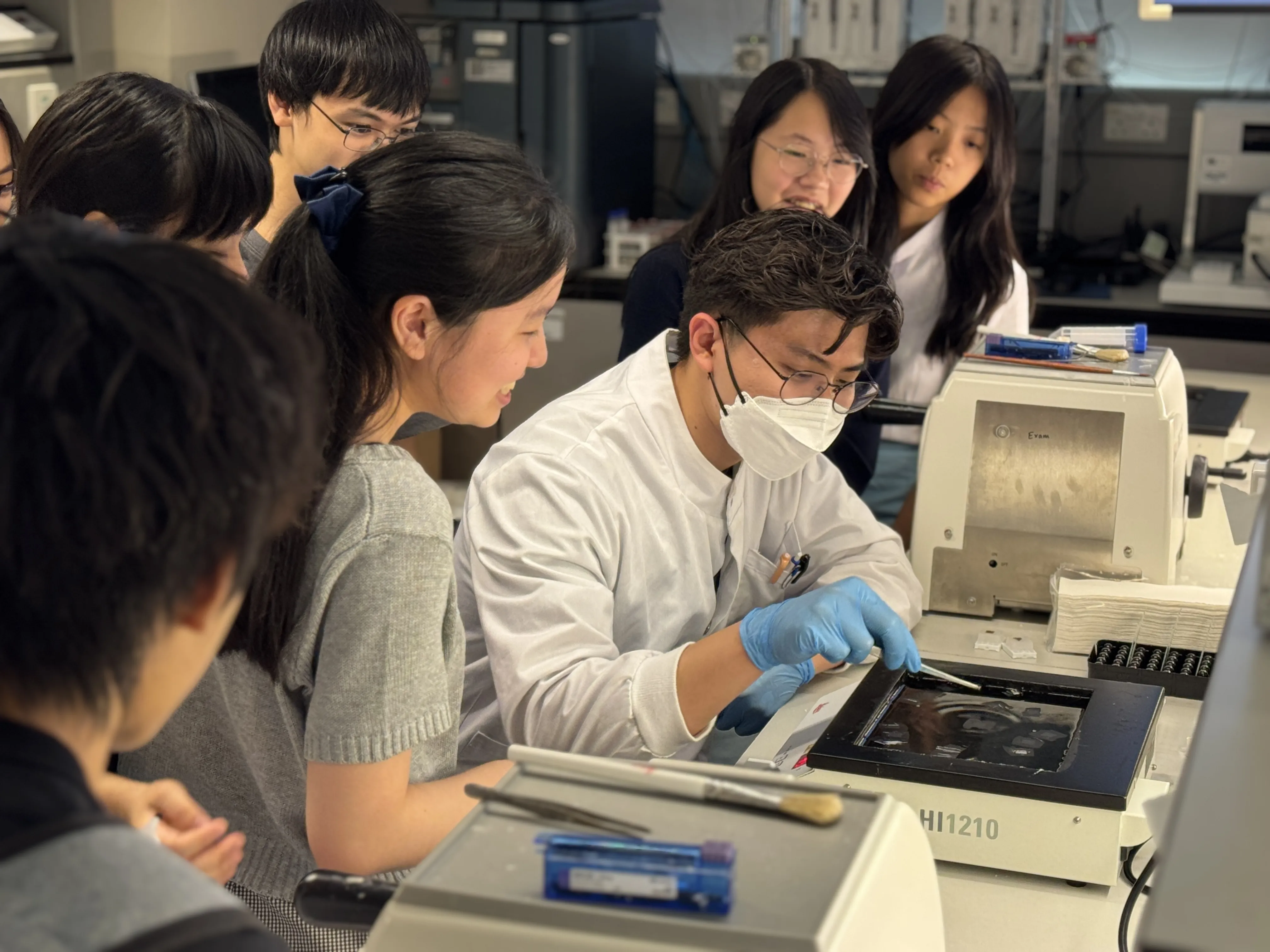
我們的三年級學生成為了「暑期體驗課程」的助手,為對醫療化驗科學感興趣的中學生介紹本校的醫療化驗科學課程。
格拉斯哥卡利多尼安大學學習團
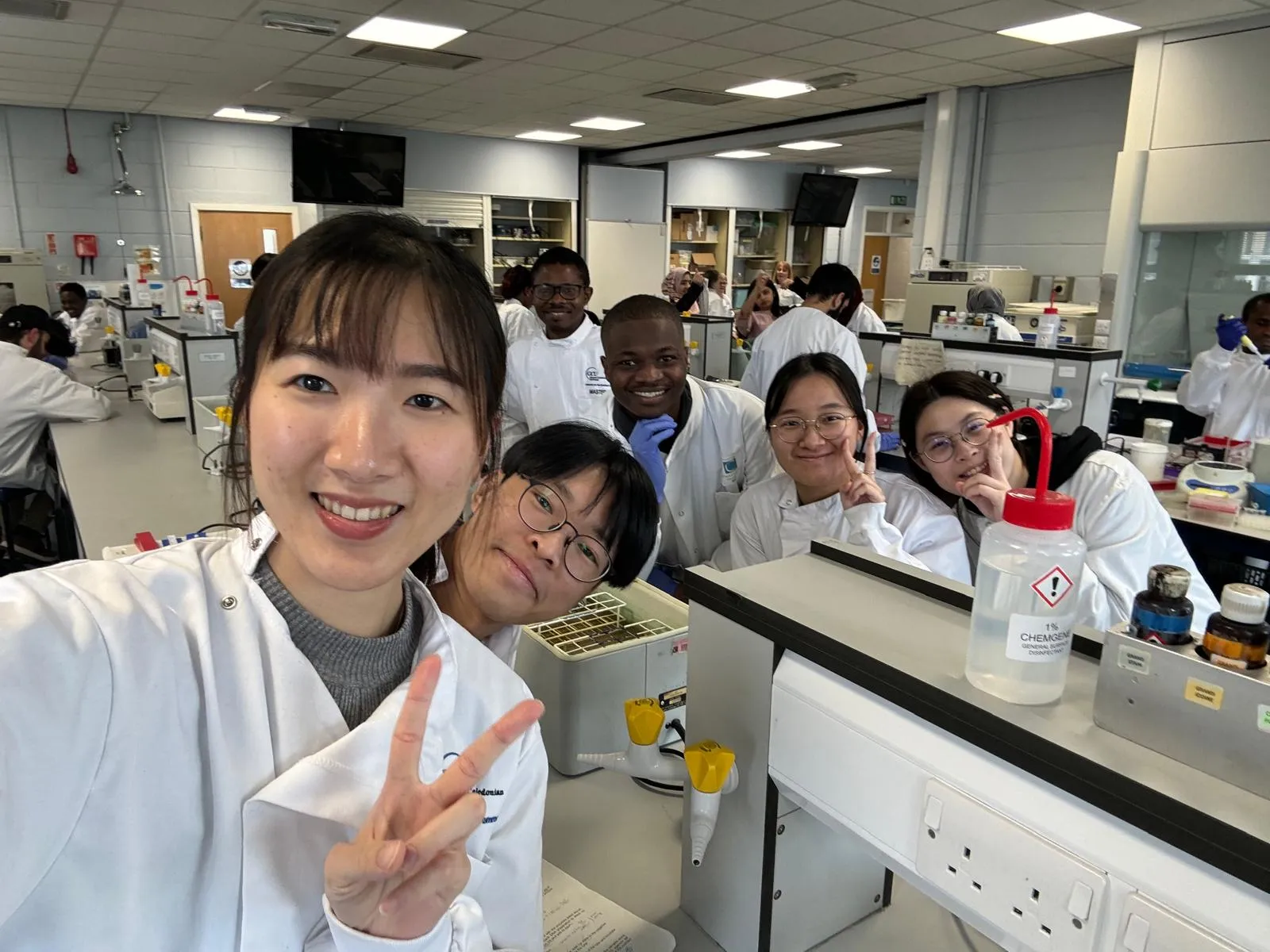
我們的四年級學生參觀了格拉斯哥卡利多尼安大學的生物醫學課程。他們上了這個課程的課堂和實驗課、匯報了他們的專題研習和參觀了當地的伊莉莎白女王大學醫院。
廣州金域醫學學習團
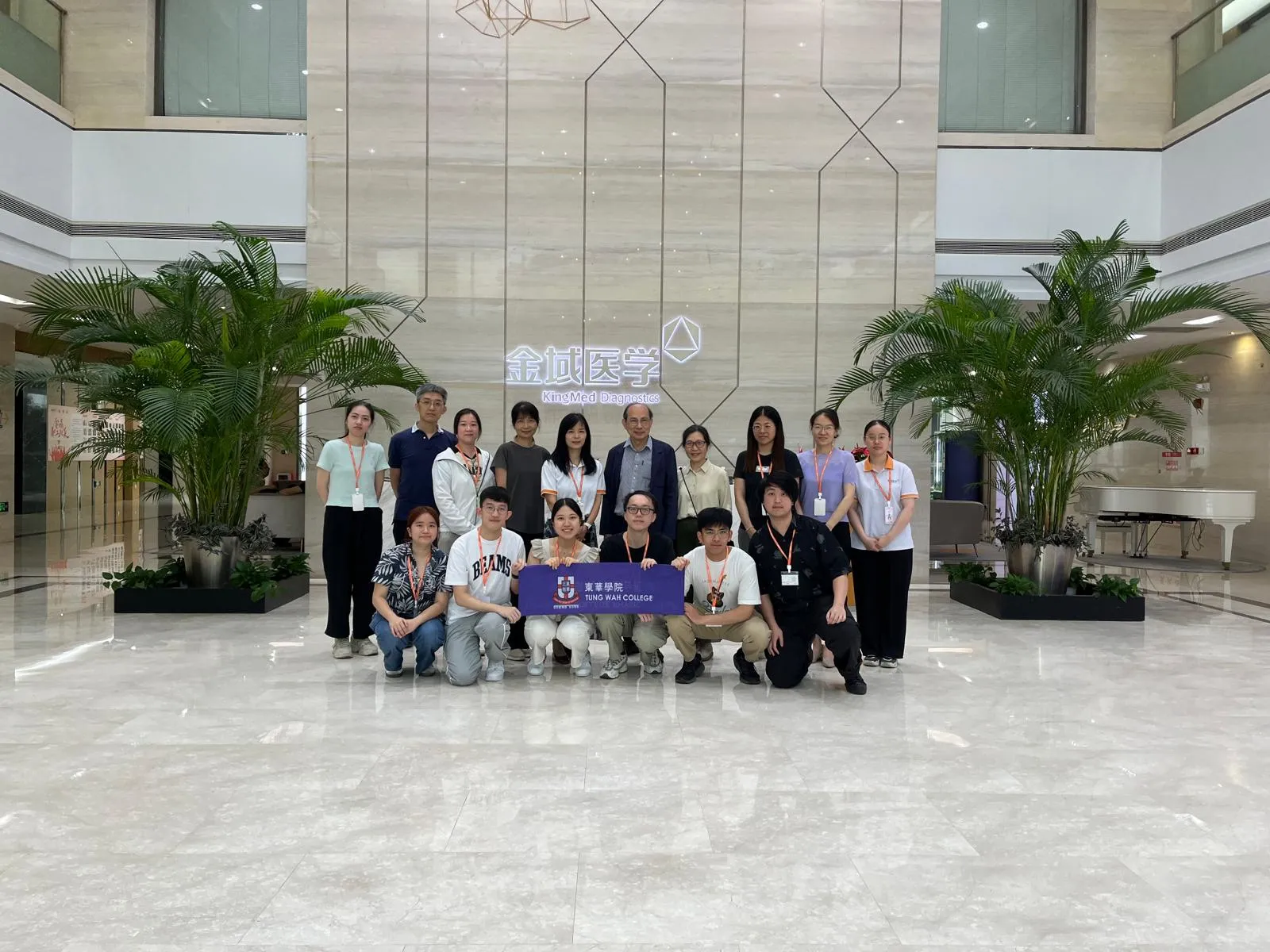
我們的三年級和四年級學生參觀了廣州金域醫學中央實施室。他們學習了當地的化驗流程,包括樣本的準備、結果分析和前沿檢測科技的報告。
如果我沒有理科背景,可以申請嗎?
理科背景對於學習醫療化驗中所有基礎技術至關重要。申請該課程的學生應在高中階段接受過系統性的理科教育(包括化學)。
選拔標準是什麼?
學生應在英語和理科科目(包括化學)中取得優異成績。
醫療化驗科學專業的學生在訓練期間會學習哪些內容?
第一年主要學習通識教育和基礎科學訓練。從第二年開始,學生將接受醫學檢驗科學所有學科的基礎和臨床訓練,包括:血液學與輸血科學、臨床生化及免疫學、醫學微生物學、解剖及細胞病理學和分子診斷學。第四年,學生將在公立或私立醫學實驗室完成480小時的臨床實習。順利完成臨床實習是畢業的必要條件之一。
醫療化驗科學專業的畢業生是否有資格向醫學檢驗技師委員會註冊,以獲得法定執業資格?
是的。醫療化驗科學學位課程已於2016年8月獲得醫學檢驗技師委員會認證。畢業生有資格向該委員會註冊,以獲得法定執業資格。
醫療化驗科學畢業生的就業前景如何?
醫療化驗科學畢業生在向醫學檢驗技師委員會註冊後,即可在本地臨床實驗室擔任醫學檢驗技師。他們也可以進入體外診斷產業,擔任技術專家。有興趣攻讀更高學位的畢業生,可以在本地或海外大學攻讀研究生學位(碩士和博士課程)。