This programme is accredited by Medical Laboratory Technologists Board. Graduates are qualified for registration as medical Laboratory Technologists (Part II).


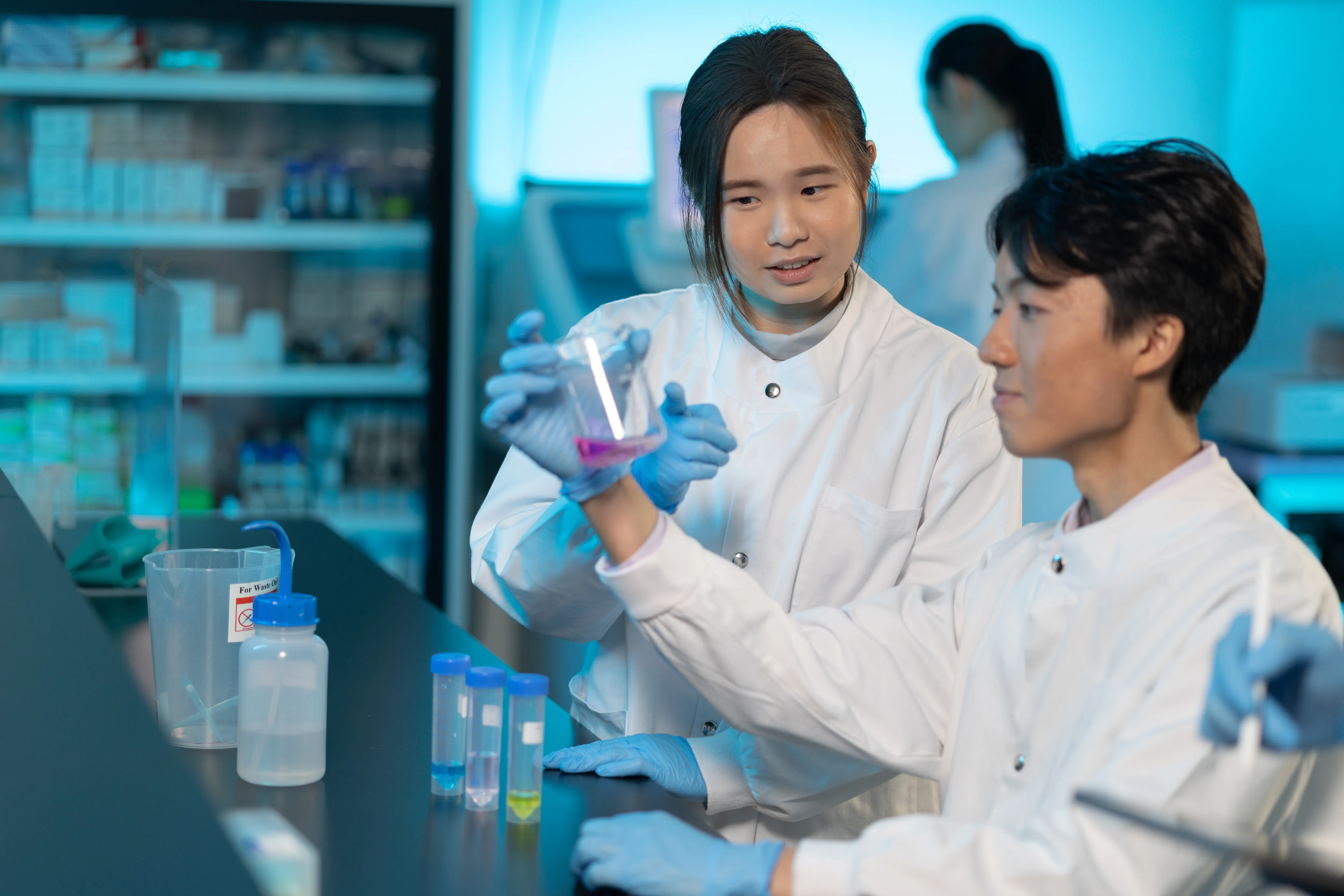
Bachelor of Science (Honours) in Medical Laboratory Science
Programme Description
The first year emphasises foundational scientific learning, language development, and general education. From the second year, students explore theories and practices in Medical Laboratory Science's four specialties: Anatomical & Cellular Pathology, Chemical Pathology, Haematology & Transfusion Science, and Medical Microbiology & Virology. After completing specialised courses, students undertake at least 200 hours of clinical practicum in the first semester of the fourth year at the clinical laboratories of public/private hospitals or private clinical laboratories, facilitating a smooth transition to the workforce.
Programme Objectives
- To develop students’ competence in medical testing with wide knowledge base in the application of analytical science in medicine.
- To equip the student with critical and analytical thinking skills for solving complex clinical problems in laboratory medicine.
- To prepare the student to be an effective and efficient healthcare practitioner for participation in contemporary clinical care paths.
Mode Of Study
| Mode Of Study | |
|---|---|
| Medium of instruction | English |
| Total no. of credits | 135 credits |
| JUPAS catalogue no. | JSST02 |
HKDSE applicants should submit applications through the Joint University Programmes Admissions System (JUPAS). There are NO self-financing places for this programme.
Programme Leader
Dr. Jason LAM
Email: jasonlam@twc.edu.hk
- PhD, The University of Hong Kong, HK
- Registered Medical Laboratory Technologist (Part I), HK
- Member of Hong Kong Society for Microbiology and Infection (HKSMI)
- Member of Hong Kong Society for Molecular Diagnostic Sciences (HKSMDS)
QF Information
| QF Information | |
|---|---|
| QF level | 5 |
| QR registration no. | 17/000003/L5 |
| Registration validity period | 01/09/2017 to 31/08/2027 |
Language Courses
| Language Courses |
|---|
| Advanced English Writing Skills |
| English for Healthcare Professionals |
| Applied Chinese Language (or Basic Chinese*) |
| Enhancing Academic English Skills |
| Developing English Language Skills |
* Alternate Chinese course for “non-Chinese speaking” students only
Discipline Courses
| Discipline Courses |
|---|
| Ageing and Diseases |
| Human Anatomy |
| Basic Laboratory Techniques and Instrumentation |
| Human Genetics |
| Biochemistry |
| Human Physiology |
| Clinical Immunology |
| Infectious Disease and Control |
| Clinical Laboratory Cellular Pathology |
| Introduction to Chinese Medicine |
| Clinical Laboratory Chemistry and Immunochemistry |
| Introduction to Health Informatics |
| Clinical Laboratory Haematology and Transfusion Science |
| Introduction to Physics |
| Clinical Laboratory Medical Microbiology |
| Molecular Diagnosis of Human Diseases |
| Clinical Practicum I (Clinical Chemistry) |
| Molecules, Cells and Genes |
| Clinical Practicum II (Haematology and Transfusion Science) |
| Pathophysiology |
| Clinical Practicum III (Anatomical and Cellular Pathology) |
| Pharmacology |
| Clinical Practicum IV (Medical Microbiology) |
| Principles of Molecular Diagnostics |
| Ethical & Legal Aspects in Health Care |
| Psychosocial Dimensions of Health and Illness |
| General Microbiology and Immunology |
| Research Methods in Biomedical Science |
| General Pathology |
| Virology |
| Honours Year Project in Medical Laboratory Science |
General Education (GE) Courses
| General Education (GE) Courses |
|---|
| Information Technology and Multimedia Application |
| The Development and Operation of Non-profit Organizations |
| Introduction to Statistics |
| Understanding and Motivating Self |
Remarks: The programme structure listed above is for reference only. For details, please consult the School concerned or refer to the Programme Definitive Document.
Year 1 Entry
For Year 1 entry, applicants should meet one of the following requirements:
- HKDSE candidates from 2024/25 onwards, have obtained Level 3 for Chinese Language and English Language and Level 2 for Mathematics and have “Attained (A)” for Citizenship and Social Development plus one Elective/Applied Learning Subject at Level 2 (“332A+2”) in HKDSE; OR
- HKDSE candidates before 2024/2025, have obtained Level 3 for Chinese Language and English Language and Level 2 for Mathematics and Liberal Studies plus one Elective/Applied Learning Subject at Level 2 (“3322+2”) in HKDSE; OR
- Have passes in AS Use of English and AS Chinese Language and Culture plus one AL subject/two AS subjects in HKALE and Level 2 for Chinese Language and English Language plus passes in three other subjects in HKCEE; OR
- Have obtained the International Baccalaureate (IB) Diploma with a minimum score of 24 and fulfilled the English language requirements:
- English A: Language and Literature (Higher or Standard Level) – Grade 4; or
- English A: Literature (Higher or Standard Level) – Grade 4; or
- English B (Higher Level) – Grade 4; or
- English B (Standard Level) – Grade 5; or
- English Literature and Performance (Standard Level) – Grade 4; or
- English Text and Performance (Standard Level) – Grade 4; OR
- Have met the 2nd cut-off line(1) of the respective province for admission to mainland key universities in the National College Entrance Examination (Gaokao) / Joint Entrance Examination for Universities in PRC (JEE, PRC) and the scores of English Language is over 100 (全國普通高等學校招生入學考試(內地高考)/ 港澳台僑聯招試達到所屬省市報讀第二批重點高校分數線)(1)以上及英語科達100分或以上; OR
- Have obtained equivalent qualifications(2).
Notes
1. Or the “cut-off line for undergraduate studies” (for provinces and cities where the 1st and 2nd cut-off lines are combined) 或「本科批次」分數線(適用於「本科一批」及「本科二批」合拼為「本科批次」的省市)
2. Please refer to the College’s website for examples of equivalent non-local qualifications for admission to bachelor’s degree programmes.
Programme Specific Requirements
- Applicants are expected to possess foundational scientific knowledge. Preference will be given to those who have previously studied Biology, Chemistry, Physics or Combined Science and obtained Level 2 or above in these subjects in HKDSE, or an equivalent qualification.
- Applicants may be invited to attend an interview.
- Applicants should have normal colour vision, as this is typically required for employment in local medical laboratories.
- Applicants should be prepared to handle human samples, tissues and body fluids.
First Year Entry
| Year | Tuition Fee (HK$) |
|---|---|
| Year 1 | $75,530 |
| Year 2 | $75,530 |
| Year 3 | $75,530 |
| Year 4 | $75,530 |
| Programme Total | $302,120 |
Notes
- Tung Wah College will adjust the tuition fee of its programmes based on the Composite Consumer Price Index to be announced by the Government annually.
- Tuition fees are normally charged by two instalments per annum and are payable before the commencement of each semester. New students are required to settle the balance of the tuition fee for the first semester (i.e. after deducting deposit) upon programme registration in August.
- Students are required to pay additional fees for all retake/additional courses which would be charged at the rate of the normal cohort and be calculated by the number of credits to be taken. Please refer the details in the College’s Fees Regulation at https://www.twc.edu.hk/en/Administration_Units/fo/our_service/student-area.
- The tuition fee for the programme under the Study Subsidy Scheme for Designated Professions/Sectors (SSSDP) is the net fee paid by a student after deduction of subsidy from the Government. In 2026/27 academic year, the annual subsidy under the SSSDP is $81,450 for laboratory-based undergraduate programmes. The annual subsidy amount may vary in each academic year subject to the decision by the Education Bureau.
- All fees paid are non-refundable and non-transferable.
- Following the Government's announcement on 31 July 2025 regarding the revised eligibility criteria for government-subsidised post-secondary student places and subsidies, the new arrangements will take effect from the 2027/28 academic year (with the application cycle commencing in October 2026). Students will be required to pay the non-subsidised tuition fees if they do not meet the updated eligibility criteria for government subsidies.
- For more details about the College's tuition fee payment schedule and fees regulation, please refer to the "Tuition Fee Payment Schedule" and "Fees Regulation" at https://www.twc.edu.hk/en/Administration_Units/fo/our_service/student-area.
Professional Recognition
The programme is accredited by the Medical Laboratory Technologists Board of the Allied Health Professions Council (AHPC) (previously known as Supplementary Medical Professions Council (SMPC)). Graduates are qualified for registration as Medical Laboratory Technologists “醫務化驗師” (Part II). This statutory registration is a prerequisite for employment in local public and private health services.
Career Prospects and Further Studies
- Graduates will mainly be employed by private and public medical laboratories, including those of the Department of Health, the Hospital Authority, private hospitals and clinics.
- Graduates may choose to pursue a career in business through employment as technical specialist in local and overseas in vitro diagnostics firms.
- For those graduates who are interested in pursuing further studies, they may choose to attend graduate school in local or overseas institutions for higher degrees (Master or Doctoral).
Graduate Profile and Employment Pathway
Please click “Graduate Profile and Employment Pathway” for details.
Participation in 'Summer Taster Programme'
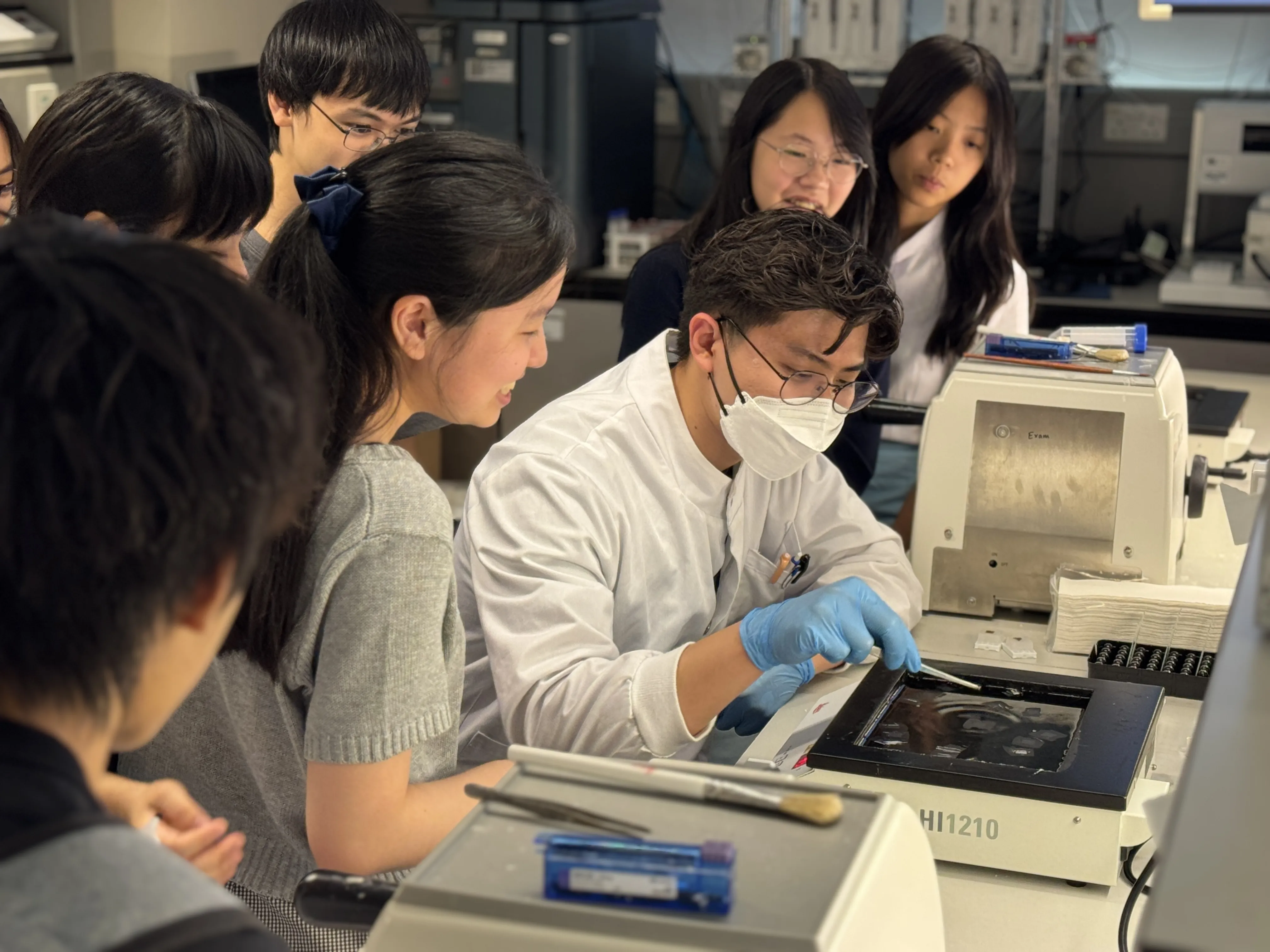
Our Year 3 Student became a student helper of 'Summer Taster Programme' and introduced our programme to the secondary students who were interested in Medical Laboratory Science.
Study tour at Glasgow Caledonian University
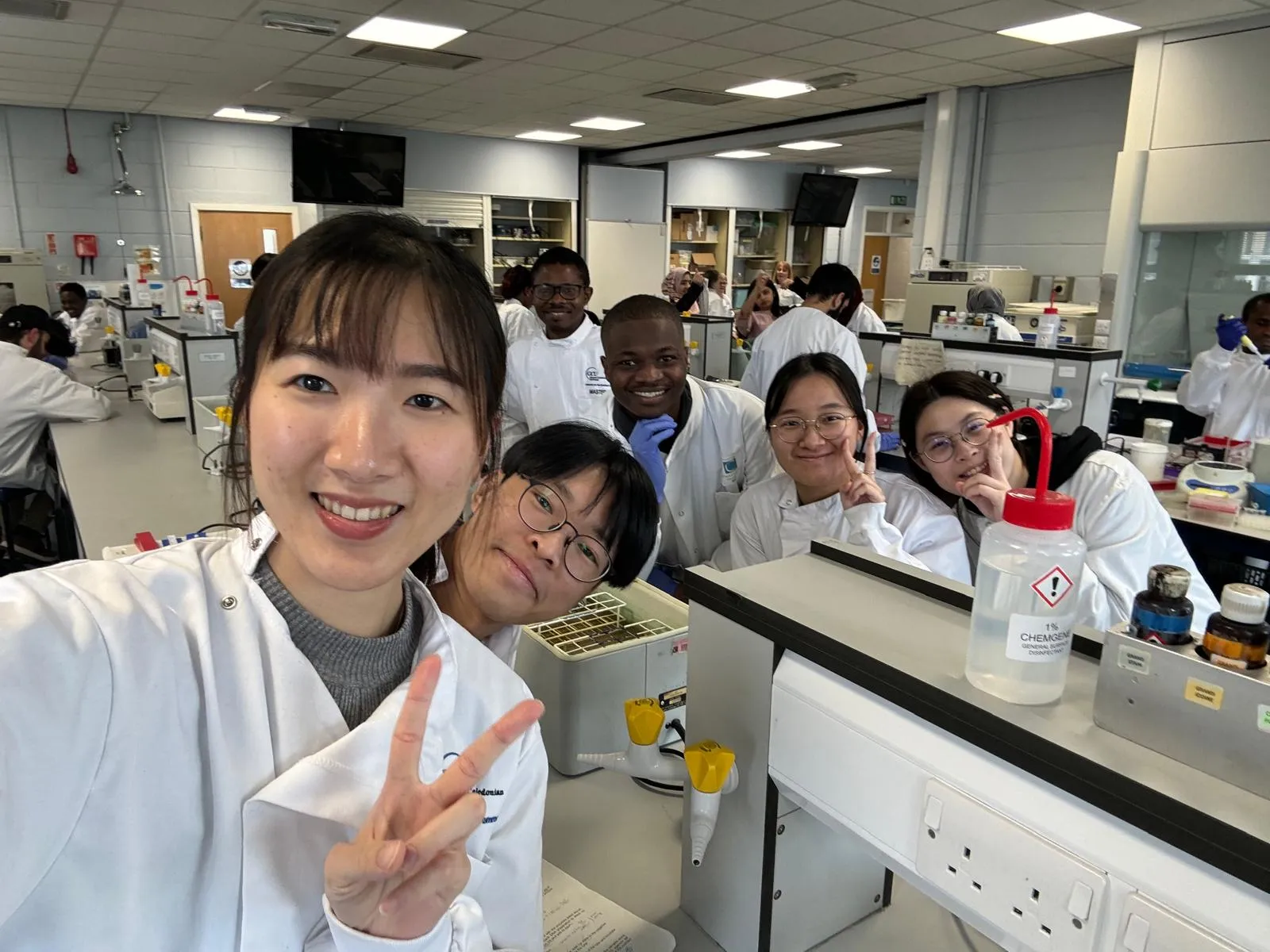
Our Year 4 Students visited the Biomedical Science Programme of Glasgow Caledonian University. They attained lectures and laboratory classes, presented their final year projects, and visited the local Queen Elizabeth University Hospital.
Study tour at KingMed Diagnostics (Guangzhou)
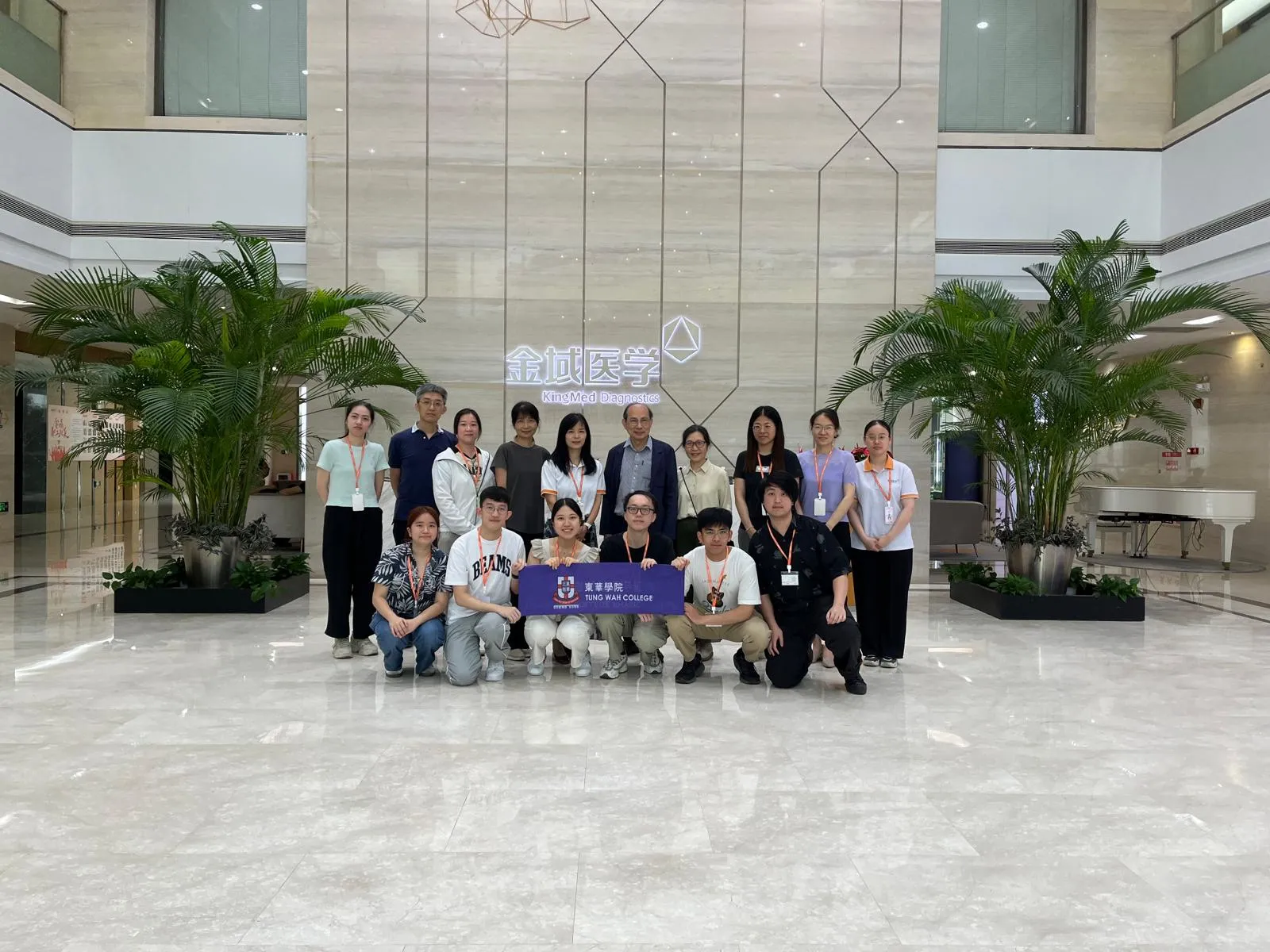
Our Year 3 and 4 Students visited the central laboratory of KingMed Diagnostics (Guzngzhou). They learned the local workflow including sample preparation, result analysis, and reporting on advanced diagnostic technology.
If I have no Science background, can I apply?
Science background is essential for learning all the basic technologies employed in medical laboratory science. The student applying for the programme is expected to have followed a structured science education (including chemistry) in the senior years of secondary education.
What are the criteria for selection?
Students are expected to score good grades in English and science subjects (including chemistry).
What will Medical Laboratory Science students learn during their training?
The first year of study will mainly be general education and foundation scientific training. From second year onwards, students will receive basic and clinical training in all disciplines of Medical Laboratory Science, including Haematology and Transfusion Science, Clinical Biochemistry and Immunology, Medical Microbiology, Anatomical and Cellular Pathology, and Molecular Diagnostics. In the fourth year, students will receive 480 hours of clinical practicum in a public or private medical laboratory. Satisfactory completion of the clinical practicum is one of the requirements for graduation.
Are graduates of Medical Laboratory Science eligible to register with the Medical Laboratory Technologist Board for statutory registration to practice?
Yes. The Medical Laboratory Science degree programme has received accreditation from the Medical Laboratory Technologists Board in August 2016. Graduates are eligible to register with the Board for the statutory registration to practice.
What are the career prospects of Medical Laboratory Science graduates?
Medical Laboratory Science graduates can begin their career as medical laboratory technologists in local clinical laboratories upon registration with the Medical Laboratory Technologist Board. They may also enter the in vitro diagnostics industry as technical specialists. Those interested in further studies may pursue postgraduate studies (Master and Doctoral programmes) in local and overseas universities.