The Bachelor of Science in Radiation Therapy program provides a comprehensive curriculum integrating radiation physics, oncology, treatment planning, and patient care. Students gain hands-on expertise through extensive clinical internships in partner hospitals. Our program features instruction from experienced therapists and physicists, advanced virtual simulation labs, and preparation for the Radiographers Board registration. We are committed to developing technical proficiency, critical thinking, and compassionate communication skills, ensuring graduates are clinical leaders ready to deliver safe, effective radiation treatment.


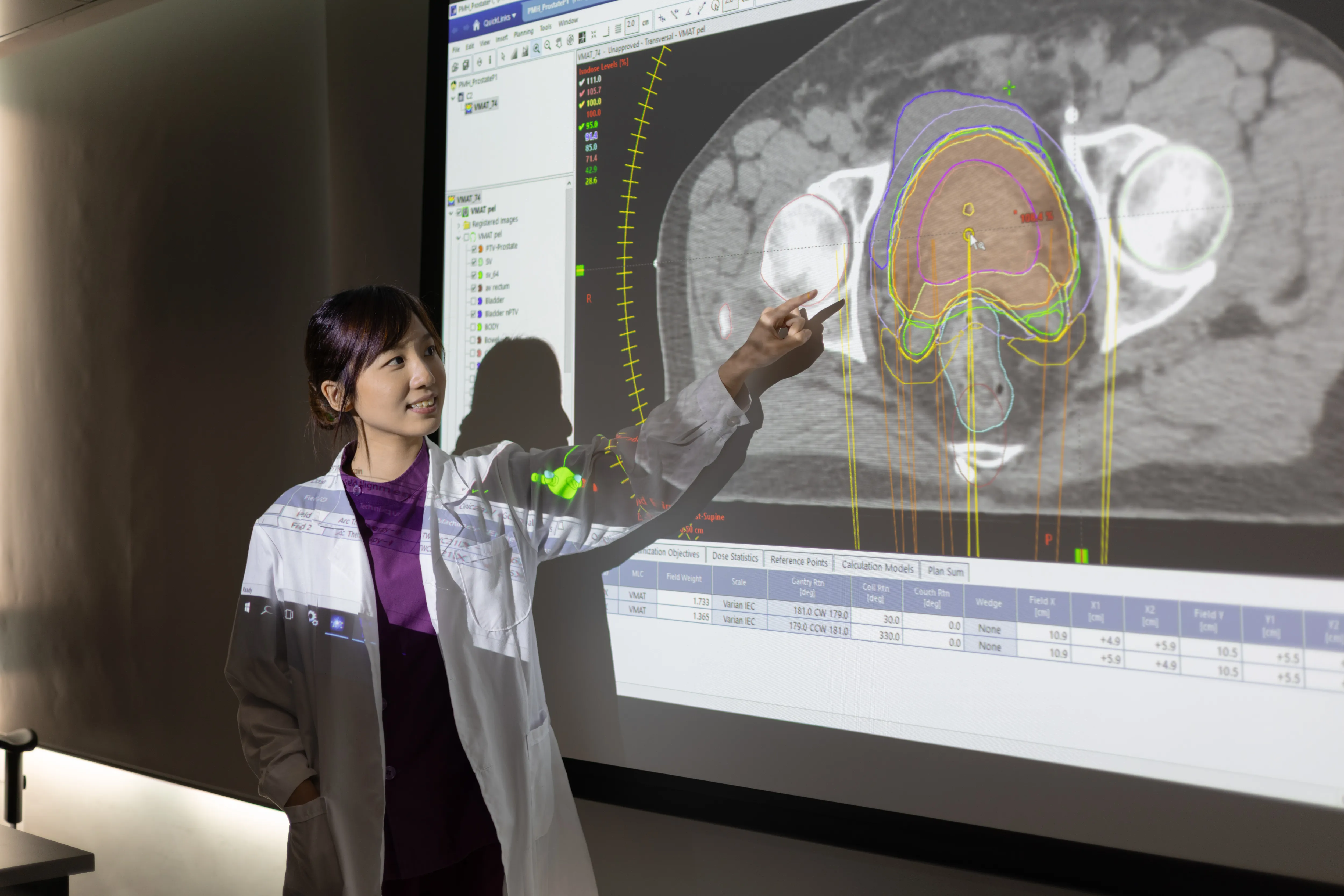
Bachelor of Science (Honours) in Radiation Therapy
Programme Description
The programme emphasises practical training, with the School providing advanced laboratories and simulation tools for students to learn radiation planning and dosimetry in class, enabling them to master operational skills in a safe environment. Students are also organised for clinical placements in Hong Kong's public and private hospitals, gaining experience in patient care and treatment delivery. Accredited by the Radiographers Board, the programme qualifies graduates for registration as Radiographers (Therapeutic) (Part II), preparing them for a professional career in radiation therapy.
Mode Of Study
| Mode Of Study | |
|---|---|
| Medium of instruction | English |
| Total no. of credits | 138 credits |
| JUPAS catalogue no. | JSST03 |
HKDSE applicants should submit applications through the Joint University Programmes Admissions System (JUPAS). There are NO self-financing places for this programme.
Programme Leader
Dr. Jacky WONG
Email: jackywong@twc.edu.hk
- Doctor of Health Science (2023), The Hong Kong PolyU
- Master of Health Science (2004), The University of Sydney, Australia
- Bachelor of Science in Radiography (1999), The Hong Kong PolyU
- DHSc, MHSc, B.Sc, CMD (US), FHKCRRT. Advanced Practitioner Certificate, Monash University, Melbourne, Australia
- Fellowship of Hong Kong College of Radiographers and Radiation Therapists
- Director, Faculty of Medical Dosimetry, Hong Kong College of Radiographers and Radiation Therapists
- Certificate of Registration (Part 1 - therapeutic), Radiographers Board, Hong Kong
- Registered Medical Radiation Practitioner, MRPB, Australia
- Certified Medical Dosimetrist, MDCB, US
QF Information
| QF Information | |
|---|---|
| QF level | 5 |
| QR registration no. | 18/000008/L5 |
| Registration validity period | 01/09/2018 to 31/08/2028 |
Language Courses
| Language Courses |
|---|
| Advanced English Writing Skills |
| Developing English Language Skills |
| Applied Chinese Language (or Basic Chinese*) |
* Alternate Chinese course for “non-Chinese speaking” students only
Discipline Courses
| Discipline Courses |
|---|
| Advanced Radiotherapy Technique and Management |
| Introduction to Medical Imaging |
| Basic Engineering Physics and Radiotherapy Equipment |
| Introduction to Physics |
| Clinical Studies I |
| Introduction to Statistics |
| Clinical Studies II |
| Molecules, Cells and Genes |
| Clinical Studies III |
| Patient Care in Radiotherapy Practice |
| Clinical Studies IV |
| Principles of Oncology and Radiotherapy |
| Clinical Studies V |
| Psychosocial Dimensions of Health and Illness |
| Clinical Studies VI |
| Radiation Oncology and Radiotherapy Technique I |
| Computed Tomography |
| Radiation Oncology and Radiotherapy Technique II |
| Contemporary Cancer Therapy |
| Radiation Physics |
| Ethical and Legal Aspects in Health Care |
| Radiation Protection and Safe Practice |
| General Microbiology and Immunology |
| Radiobiology |
| General Pathology |
| Radiographic Imaging Science |
| Honours Year Project |
| Radiotherapy and Dosimetry II |
| Human Anatomy |
| Radiotherapy Patient Management |
| Human Physiology |
| Radiotherapy Planning and Dosimetry I |
| Imaging Anatomy |
| Research Methods in Biomedical Science |
| Introduction to Health Informatics |
| + 2 Discipline elective courses |
| Introduction to Magnetic Resonance Imaging |
General Education (GE) Courses
| General Education (GE) Courses |
|---|
| Big Data and Data Sciences |
| Understanding and Motivating Self |
| The Development and Operation of Non-profit Organizations |
| + Select 1 course from the College’s GE course list |
Remarks: The programme structure listed above is for reference only. For details, please consult the School concerned or refer to the Programme Definitive Document.
Year 1 Entry
For Year 1 entry, applicants should meet one of the following requirements:
- (HKDSE candidates from 2024/25 onwards) Have obtained Level 3 for Chinese Language and English Language and Level 2 for Mathematics and have “Attained (A)” for Citizenship and Social Development plus one Elective/Applied Learning Subject at Level 2 (“332A+2”) in HKDSE; OR
- (HKDSE candidates before 2024/2025) Have obtained Level 3 for Chinese Language and English Language and Level 2 for Mathematics and Liberal Studies plus one Elective/Applied Learning Subject at Level 2 (“3322+2”) in HKDSE; OR
- Have passes in AS Use of English and AS Chinese Language and Culture plus one AL subject/two AS subjects in HKALE and Level 2 for Chinese Language and English Language plus passes in three other subjects in HKCEE; OR
- Have obtained the International Baccalaureate (IB) Diploma* with a minimum score of 24 and fulfilled the English language requirements:
- English A: Language and Literature (Higher or Standard Level) – Grade 4; or
- English A: Literature (Higher or Standard Level) – Grade 4; or
- English B (Higher Level) – Grade 4; or
- English B (Standard Level) – Grade 5; or
- English Literature and Performance (Standard Level) – Grade 4; or
- English Text and Performance (Standard Level) – Grade 4;
- Have obtained an equivalent qualification(1).
Notes:
- Please refer to the College’s website for examples of equivalent non-local qualifications for admission to bachelor’s degree programmes.
Senior Year Entry (3 years of study)
For Senior Year entry, applicants should meet one of the following requirements:
- Have completed a BSc in Radiography or Medical Imaging outside Hong Kong; OR
Have obtained equivalent qualifications.
Programme Specific Requirements
- Applicants must have obtained Level 3 or above in one science-related Elective / Applied Learning subject^ in HKDSE.
- Preference will be given to applicants who have obtained Level 3 or above in Mathematics (Compulsory Part) / Physics / Integrated Science* / Combined Science with Physics* in HKDSE.
- Preference will be given to applicants who have obtained Level 4 or above in English Language in HKDSE.
- Applicants should have normal colour vision, as this is usually required for employment in radiotherapy departments of public and private hospitals.
^ Biology / Chemistry / Combined Science / Integrated Science / Physics / Health Care Practice (Attained with Distinction (I))
* Obtained before 2024 DSE
First Year Entry
| Year | Tuition Fee (HK$) |
|---|---|
| Year 1 | $80,740 |
| Year 2 | $80,740 |
| Year 3 | $80,740 |
| Year 4 | $80,740 |
| Programme Total | $322,960 |
- Tung Wah College will adjust the tuition fee of its programmes based on the Composite Consumer Price Index to be announced by the Government annually.
- Tuition fees are normally charged by two instalments per annum and are payable before the commencement of each semester. New students are required to settle the balance of the tuition fee for the first semester (i.e. after deducting deposit) upon programme registration in August.
- Students are required to pay additional fees for all retake/additional courses which would be charged at the rate of the normal cohort and be calculated by the number of credits to be taken. Please refer the details in the College’s Fees Regulation at https://www.twc.edu.hk/en/Administration_Units/fo/our_service/student-area.
- The tuition fee for the programme under the Study Subsidy Scheme for Designated Professions/Sectors (SSSDP) is the net fee paid by a student after deduction of subsidy from the Government. In 2026/27 academic year, the annual subsidy under the SSSDP is $81,450 for laboratory-based undergraduate programmes. The annual subsidy amount may vary in each academic year subject to the decision by the Education Bureau.
- All fees paid are non-refundable and non-transferable.
- Following the Government's announcement on 31 July 2025 regarding the revised eligibility criteria for government-subsidised post-secondary student places and subsidies, the new arrangements will take effect from the 2027/28 academic year (with the application cycle commencing in October 2026). Students will be required to pay the non-subsidised tuition fees if they do not meet the updated eligibility criteria for government subsidies.
- For more details about the College's tuition fee payment schedule and fees regulation, please refer to the "Tuition Fee Payment Schedule" and "Fees Regulation" at https://www.twc.edu.hk/en/Administration_Units/fo/our_service/student-area.
Senior Year Entry
Senior Year Entry is available.
For Senior Year Level entry, applicants should:
- have completed a BSc in Radiography or Medical Imaging;
- OR have obtained equivalent qualifications.
| Year | Tuition Fee (HK$) |
|---|---|
| Year 1 | $162,190 |
| Year 2 | $162,190 |
| Year 3 | $162,190 |
| Programme Total | $486,570 |
- Tung Wah College will adjust the tuition fee of its programmes based on the Composite Consumer Price Index to be announced by the Government annually.
- Tuition fees are normally charged by two instalments per annum and are payable before the commencement of each semester. New students are required to settle the balance of the tuition fee for the first semester (i.e. after deducting deposit) upon programme registration in August.
- Students are required to pay additional fees for all retake/additional courses which would be charged at the rate of the normal cohort and be calculated by the number of credits to be taken. Please refer the details in the College’s Fees Regulation at https://www.twc.edu.hk/en/Administration_Units/fo/our_service/student-area.
- All fees paid are non-refundable and non-transferable. For more details about the College's tuition fee payment schedule and fees regulation, please refer to the "Tuition Fee Payment Schedule" and "Fees Regulation" at https://www.twc.edu.hk/en/Administration_Units/fo/our_service/student-area.
- The actual tuition fee payable will be based on the number of credits required for graduation of the student. The number of credits required for graduation for each student depends on the student’s attainments of advance standing.
Professional Recognition
The programme has received accreditation from the Radiographers Board of the Allied Health Professions Council (AHPC) (previously known as Supplementary Medical Professions Council (SMPC)) in August 2016. Graduates are qualified for registration as Radiographers (Therapeutic Stream) (Part II).
Career Prospects and Further Studies
- The programme enables the graduates to be recognised and be employed in their professions.
- Graduates will mainly be employed by public or private hospitals.
- The rich programme curriculum enables graduates to further study in local and overseas master programmes in medical imaging and radiation science, medical physics and healthcare management.
Graduate Profile and Employment Pathway
Please click “Graduate Profile and Employment Pathway” for details.
Community service - introducing the Radiograher profession
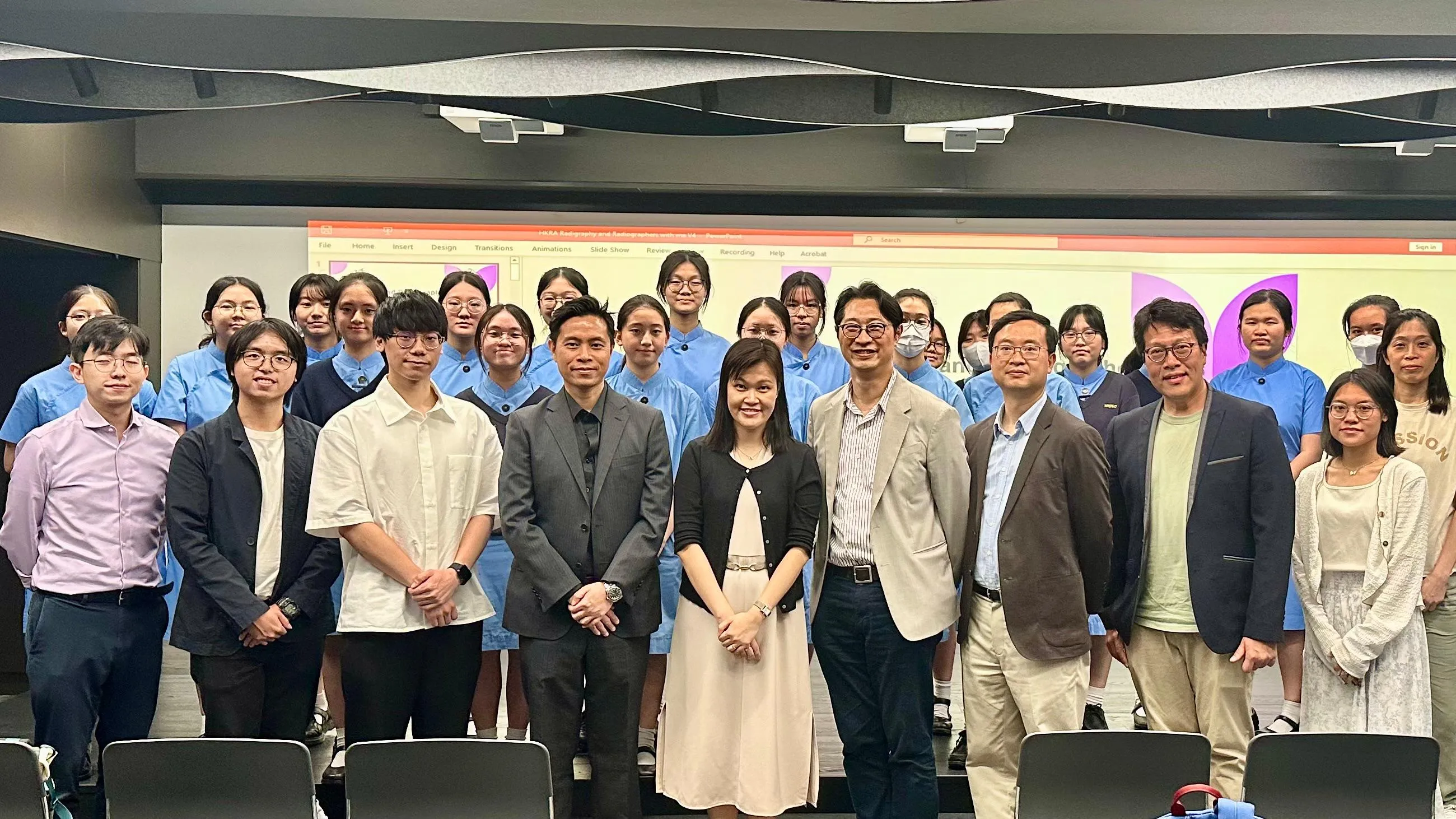
Our Year 3 & 4 students participated in a meaningful community service with Hong Kong Radiographers' Association in promoting Radiographer professsion to secondary school students at True Light College.
Students directed community service - meeting breast cancer warriors
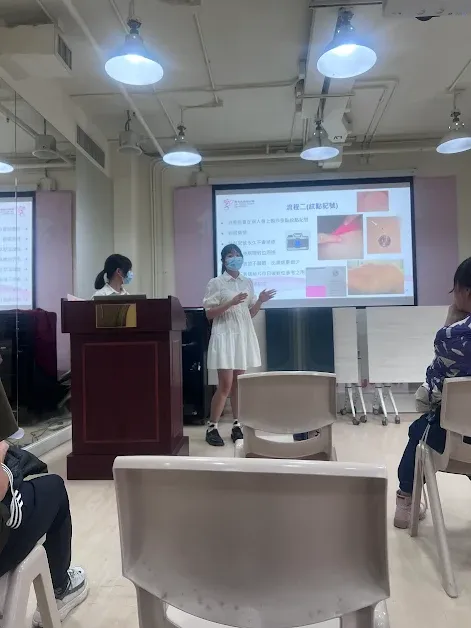
Our Year 2 students directed an educational talks to breast cancer patients at Breast Cancer Foundation Choi Hung Centre. It provides an excellent opportunity for our students to develop the sense of community service and understanding the journey of breast cancer patients.
Students visit to PeterMac Cancer Centre, Australia
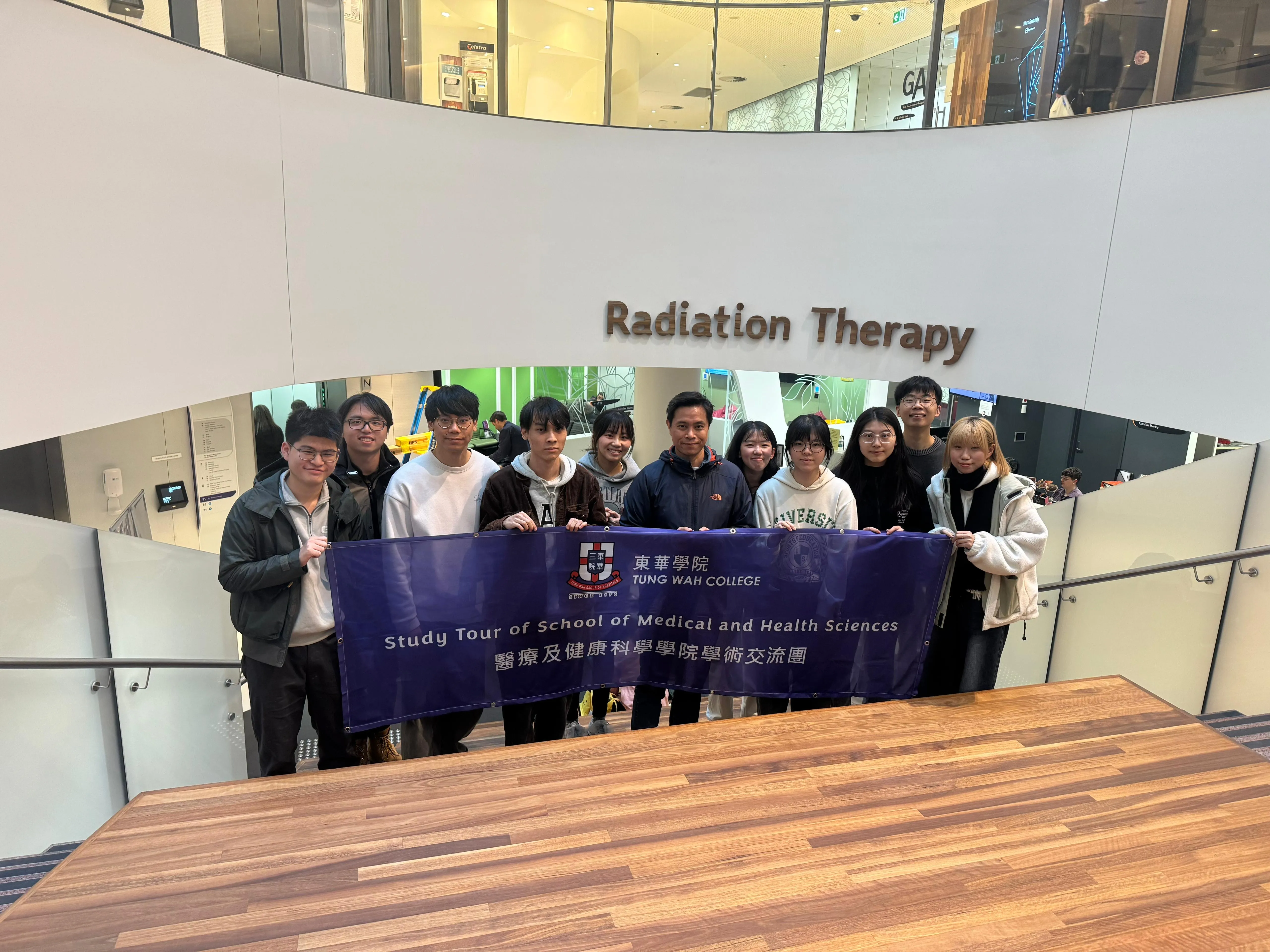
Our Year 3 & Year 4 students participated in a 10 days overseas study trip to Melbourne, Australia. They have exchanged activities with Monash University students and full half-week attachment at PeterMac Cancer Centre, the largest radiation therapy centre in Victoria.
What are the preferred subjects for admission to the Radiation Therapy programme?
In radiation therapy studies, the student needs to know about the physics of radiation and their interaction with matters. Therefore having studied physics is an advantage. If you really do not have a physics background, a science background is preferred.
What will a Radiation Therapy student learn during the training?
The first year will mainly be general education and foundation scientific and clinical training. From the second year onwards, students will study the core subjects in radiation therapy such as Oncology, Radiation Therapy Technology, Radiation Physics, Radiotherapy Equipment, Radiobiology, Imaging Science and Anatomy, Computed Tomography, Magnetic Resonance Imaging, Patient Care.
Do all Radiation Therapy students need to have clinical practicum?
Yes, all Radiation Therapy students have to do 36 weeks of clinical practicum in a radiotherapy department in public and private hospitals. Satisfactory completion of the clinical practicum is one of the prerequisites for graduation.
Are graduates of Radiation Therapy eligible to register with the statutory Radiographers Board for a licence to practice?
Yes, the Radiation Therapy degree programme has received approval from the Radiographers Board in August 2016 after accreditation. Graduates are eligible to register with the Board for the statutory registration to practise.
What are the career prospects of a Radiation Therapy graduate?
Radiation Therapy graduates upon registration with the Radiographers Board (Therapeutic) can begin their career as a Radiation Therapist in local Radiation Therapy departments. Some related industries will also employ graduates from this programme. Further postgraduate studies (Master and Doctoral programmes) in local and overseas universities may be pursued for those interested in attaining a higher degree.
| No. | Date | News Title |
|---|---|---|
| 1 | 18 Mar 2017 | 修讀放射治療學 掌握科技助人治癌 (信報) |
| 2 | 23 Sep 2016 | 培育輔助醫療業人才 紓緩病人輪候治療之苦 (信報) |
| 3 | 31 Aug 2016 | 東華學院兩課程 獲醫療專業認證 獲政府資助 收生門檻提高 (星島日報) |
| 4 | 31 Aug 2016 | 東華學院兩醫療課程獲專業認證 (東方日報) |
| 5 | 31 Aug 2016 | 東華兩醫療學位獲認證 (大公報) |
| 6 | 31 Aug 2016 | 東華化驗放射課程 納入政府資助 (明報) |
| 7 | 18 Aug 2016 | 東華醫療科學學士 獲資助學費減半 自資課程 學額32個 (星島日報) |
| 8 | 18 Aug 2016 | 東華學院兩醫療課程納政府資助 (東方日報) |
| 9 | 18 Aug 2016 | 明年增32資助學額 全歸東華學院 (成報) |
| 10 | 18 Aug 2016 | SSSDP 添食 資助東華兩課程 (文匯報) |
| 11 | 11 July 2016 | 東華學院培訓專職醫療及復康專才 (明報) |