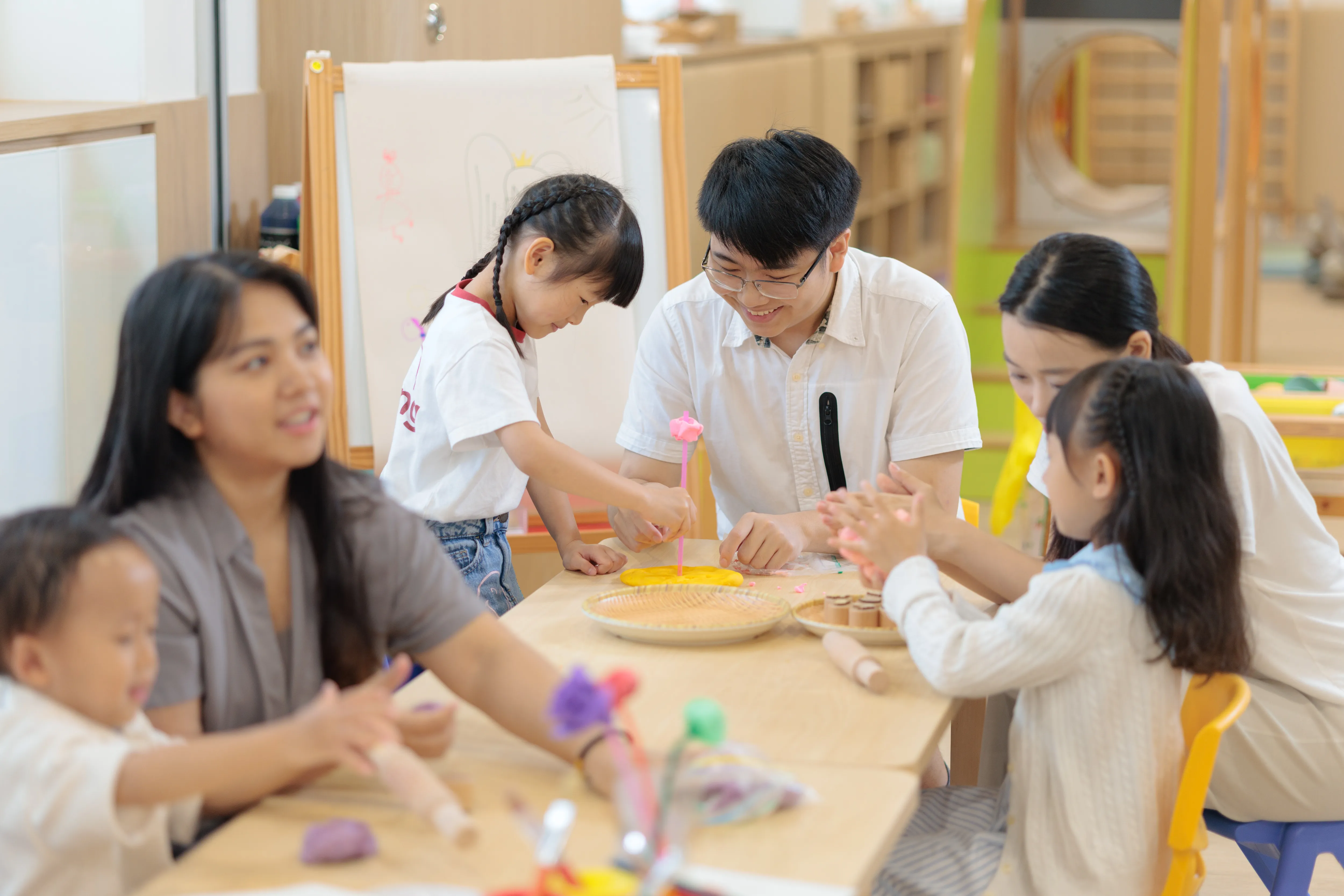
The programme equips students with the professional knowledge and skills to pursue careers in early childhood education, care, and management. The curriculum covers essential areas such as childhood development, educational psychology, and pedagogy for children aged from 0-8. A distinctive aspect lies in its dedication to rigorous, experiential, and integrated learning approaches. Students acquire practical insights via interactive sessions such as guided play activities in our purpose-built Early Childhood Play and Learning Laboratory, equipping them with robust hands-on preparation for successful integration into the early education sector.

Higher Diploma in Early Childhood Education
Programme Description
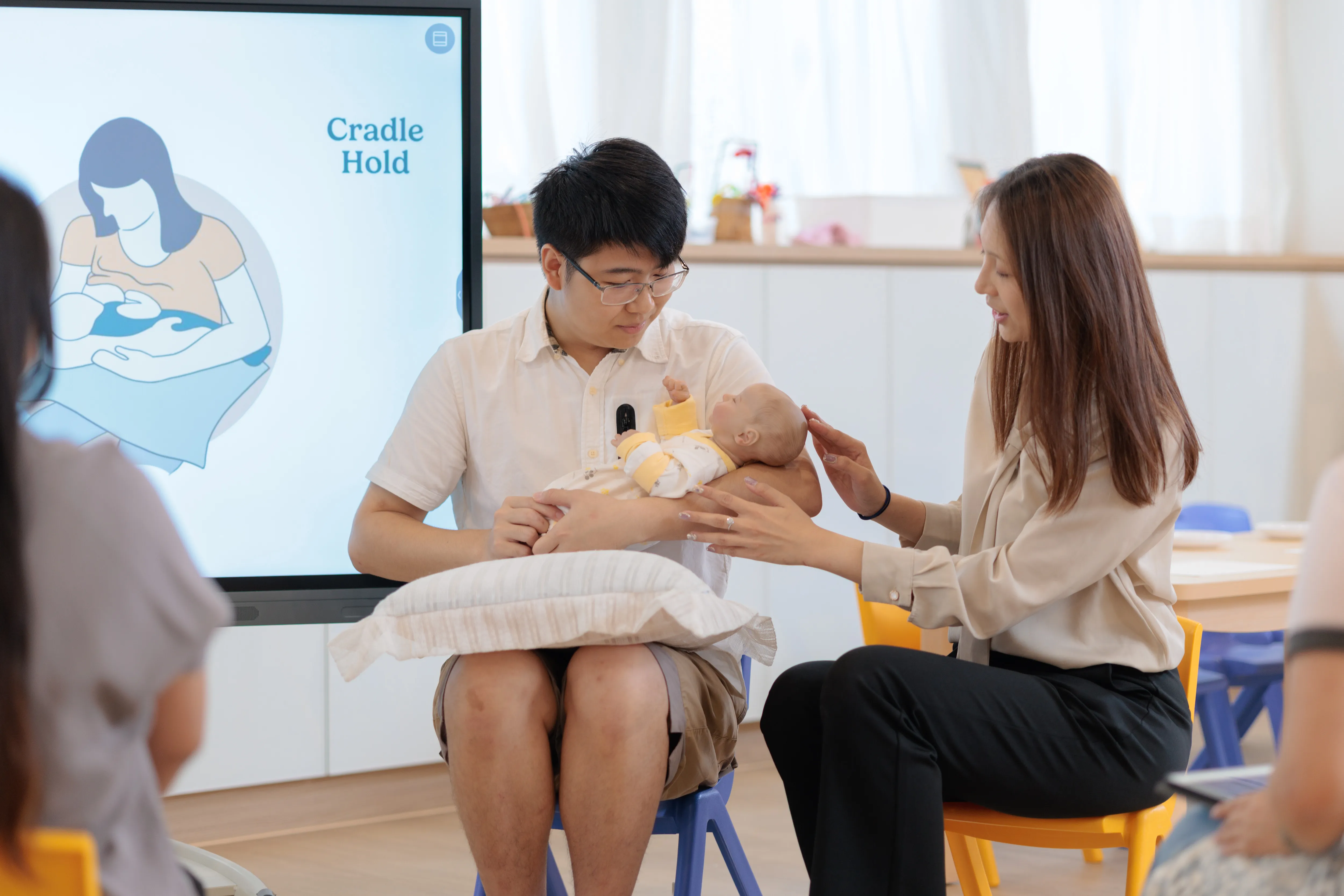
This programme nurtures aspiring practitioners in early childhood education, with a distinctive emphasis on the pivotal 0-3 age group. Students need to take the modules provided by School of Nursing and School of Medical and Health Sciences to mast the specialized expertise in "educare"—seamlessly blending education and care for infants and toddlers. Building on a solid foundation in child development and pedagogy, this targeted training equips graduates for elevated positions in early childhood institutions, family education guidance, and specialized services dedicated to young children's well-being.
Programme Objectives
- To apply knowledge about the theories and process of child development;
- To describe the interconnectedness between socio-demographic, economic, political and cultural changes and the development of childcare sectors with particular reference to Hong Kong;
- To apply the knowledge and skills in planning, implementing and evaluating contemporary early childhood curriculum and programmes appropriate to the early childhood education settings;
- To integrate understanding of special educational needs of children with developmental challenges in early childhood education;
- To utilise critical, analytical and problem-solving skills;
- To apply effective interpersonal skills in communication with child care professionals, children and parents in early childhood settings;
- To demonstrate the educational and professional responsibilities in early childhood settings;
- To recognise the capacity for continuous independent learning and reflective practice.
Mode Of Study
| Mode Of Study | |
|---|---|
| Medium of instruction | English |
| Total no. of credits | 72 credits |
Programme Leader
Ms. Ada TSANG
Email: adatsang@twc.edu.hk
- Certificate in Kindergarten Principalship, Hong Kong
- Baptist University MEd in Inclusive and Special Education, The University of Hong Kong
- BEd in Early Childhood Education, The Education University of Hong Kong
QF Information
| QF Information | |
|---|---|
| QF level | 4 |
| QR registration no. | 16/000585/L4 |
| Registration validity period | 01/09/2016 to 31/08/2028 |
Entrance Scholarships
Please click here for details.
Language Courses
| Language Courses |
|---|
| Applied Chinese Language (or Basic Chinese)* |
| Enhancing Academic English Skills |
| Developing English Language Skills |
| Putonghua |
* Alternate Chinese course for “non-Chinese speaking” students only
Discipline Courses
| Discipline Courses |
|---|
| Child Development |
| Enhancing Academic English Skills |
| Introduction to Children with Diverse Needs |
| Contemporary Approaches in Early Childhood Education |
| Involvement with Parents in Early Childhood Settings |
| Infant Care, Safety and Health |
| Language and Literacy in Early Childhood Education |
| Early Childhood Curriculum Design, Implementation and Evaluation |
| Learning through Play |
| Educational Management in Early Childhood Settings |
| Mathematics and Nature Science in Early Childhood Curriculum |
| Expressive Arts, Music and Movement |
| Practicum I |
| Family and Culture |
| Practicum II |
| Foundations of Early Childhood Education |
| Principles and Strategies for Supporting Children with Diverse Needs |
| Introduction to Assessment of Children’s Learning |
General Education (GE) Courses
| General Education (GE) Courses |
|---|
| Information Technologies and Multimedia Application |
| + Select 1 course from the College’s GE course list (GEC or GED) |
| Psychology in Everyday Life |
First Year Entry
For Year 1 entry to Higher Diploma programme, applicants should meet one of the following requirements:
- Have obtained level 2 in five HKDSE subjects (1), including Chinese Language (2), English Language (Applicant is allowed to use Applied Learning subjects (3) in the application); or
- Have obtained a pass in one AL subject or passes in two AS subjects in HKALE and five passes in HKCEE including Chinese Language and English Language; or
- Have obtained a pass in one AL subject or passes in two AS subjects in HKALE and three passes in HKCEE plus Level 2 for Chinese Language and English Language; or
- Have successfully completed a Pre-Associate Degree programme#; or
- Have successfully completed Yi Jin Diploma programme / Diploma of Applied Education programme; or
- Have obtained an equivalent qualification(4); or
- Have relevant and substantial work experience and/or prior qualification(s) obtained in or outside Hong Kong (e.g. assessed through recognition of prior learning and credit accumulation and transfer), with demonstrated ability to undertake sub-degree education; or
- Have reached the age of 21 years old or above before 1 September in the year in which admission is sought.
# Qualification(s) in the relevant discipline at QF Level 3 with a total learning size of normally 150 QF Credits with learning contents covering Chinese and English Languages.
^ Mainland applicants who have met the 3rd cut-off line of the respective province in the National College Entrance Examination (Gaokao) and the score of English Language is at least 80.
Remarks:
- If one of the five HKDSE subjects is Citizenship and Social Development subject, the minimum entrance requirement would become “Attained” for Citizenship and Social Development subject and Level 2 in four other HKDSE subjects including Chinese and English. Besides, Level 2 in Mathematics Extended Part (Module 1 or Module 2) is also recognised as one of the five HKDSE subjects in fulfilling the minimum entrance requirement.
For non-Chinese-speaking learners, alternative Chinese Language qualifications will be accepted for students who have met the specified conditions:
- Students who have learned Chinese Language for less than 6 years while receiving primary and secondary education;
- Students who have learned Chinese Language for 6 years or more in schools, but have been taught an adapted and simpler Chinese Language curriculum not normally applicable to the majority of students in local schools.
ApL Chinese (for non-Chinese speaking students) should, in general, be accepted as an alternative Chinese Language qualification, among other acceptable alternative Chinese Language qualifications.
- The ApL subjects do not include ApL Chinese (for non-Chinese speaking students) as this subject is introduced to provide an additional channel exclusively for non-Chinese speaking students to obtain an alternative Chinese language qualification. For the 2012-2017 HKDSE Examinations, students attaining the results of “Attained” and “Attained with Distinction” in the ApL subjects are accepted as attaining the competencies required at Level 2 and Level 3 or above of Category A subjects of the HKDSE Examination respectively for the purposes of further studies and work. Effective from the 2018 HKDSE Examination, the reporting of students’ performance is refined to “Attained”, “Attained with Distinction (I)” and “Attained with Distinction (II)”. Performance of “Attained with Distinction (I)” is comparable to Level 3 while “Attained with Distinction (II)” is comparable to Level 4 or above of Category A subjects of the HKDSE Examination.
- Please refer to the College’s website for examples of equivalent non-local qualifications for admission to Higher Diploma programmes.
| Year | Tuition Fee (HK$) |
|---|---|
| Year 1 | $70,580 |
| Year 2 | $70,580 |
| Programme Total | $141,160 |
- The College will adjust the tuition fee of its programmes based on the Composite Consumer Price Index to be announced by the Government annually.
- Tuition fees are normally charged by two instalments per annum and are payable before the commencement of each semester. New students are required to settle the balance of the tuition fee for the first semester (i.e. after deducting deposit) upon programme registration in August.
- Students are required to pay additional fees for all retake/additional courses which would be charged at the rate of the normal cohort and be calculated by the number of credits to be taken. Please refer the details in the College’s Fees Regulation at https://www.twc.edu.hk/en/Administration_Units/fo/our_service/student-area.
- All fees paid are non-refundable and non-transferable.
- For more details about the College's tuition fee payment schedule and fees regulation, please refer to the "Tuition Fee Payment Schedule" and "Fees Regulation" at "https://www.twc.edu.hk/en/Administration_Units/fo/our_service/student-area".
Professional Recognition
- Graduates are recognised by the Education Bureau (EDB) as meeting the requirement for registration as Qualified Kindergarten Teachers under the Education Ordinance, and;
- eligible for registration as Child Care Workers (CCW) and Child Care Supervisors (CCS) under the Child Care Services Ordinance of the Social Welfare Department (SWD).
Career Prospects and Further Studies
- Graduates are capable of serving in various early childhood settings in Hong Kong such as crèche, child care center, nursery school, nursery cum kindergarten, kindergarten, international school and special child care centre as well as playgroup.
- Students are eligible to apply for articulation to senior year entry of the Bachelor of Education (Honours) programme upon completion of studies.
Direct Articulation
Directly articulate to senior year entry of the Bachelor of Education (Honours) programme upon completion of studies
Immersing in the Art of Play
Learning through play is a vital part of early childhood settings. To design play activities, one must first understand what play is. Students from the early childhood programme had a fun time immersing themselves in free play at our Early Childhood Play and Learning Laboratory, trying to rediscover the mindset of 'play' from their childhood.
Children's Play in Action'- Sharing by Experienced Principal
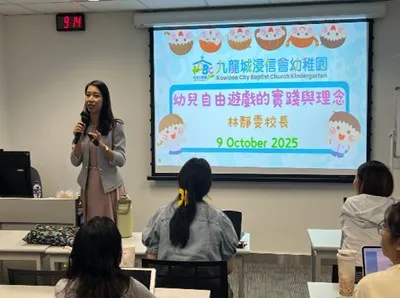
Putting play into practice can be challenging for new teachers. To provide a concrete example of learning through play in action, we have invited Principal Lam from Kowloon City Baptist Church Kindergarten and Kowloon City Baptist Church Ka Fuk Kindergarten. With her extensive experience in implementing play-based pedagogy, Principal Lam shared practical strategies and insights on how to effectively integrate play into early childhood settings.
Inspiring Career Development: Providing Insights into Potential Career Pathways
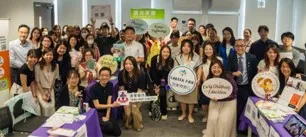
Both BEd(ECE) and HD(ECE) students have participated in the ARH Career Fair 2025. The Career Fair has successfully invited 13 industrial partners (including 2 kindergartens, 1 child development center, 1 NGO with childcare and early childhood education services). The industry representatives networked with the students and shared career preparation tips. This event has effectively aspired students on the career development.
What will I learn in TWC’s Higher Diploma in Early Childhood Education programme?
This programme aims to provide students with profession-specific knowledge and skills and other generic skills for employment and further study. It will equip students with the required professional knowledge and skills for pursuing careers as a kindergarten teacher / childcare worker / childcare supervisor.
What are the special features of TWC’s Higher Diploma in Early Childhood Education Programme?
A wide range of teaching methods will be used, including workshops, school visits, seminars, discussions and practicum. In particular, practicum provides an opportunity for students to apply theory to practice. Through school attachment, educational visits and block practice placement in kindergartens or child care centres, students are facilitated to acquire, refine and demonstrate the skills required of competent beginning teachers. Education for children with Special Education Need (SEN) is another unique feature of the Programme. Some specialised courses are included in the curriculum. Teaching staff with expertise in relevant disciplines such as Occupational Therapy, Psychology and Language will be involved in the design and teaching of courses in SEN.
Is this programme accredited by the government and professionally recognised?
This programme is validated for a Higher Diploma qualification by the Hong Kong Council for Accreditation of Academic and Vocational Qualifications (HKCAAVQ). Graduates of the programme are recognised by the Education Bureau (EDB) as meeting the requirement for registration as Qualified Kindergarten Teachers under the Education Ordinance, and eligible for registration as Child Care Workers (CCW) and Child Care Supervisors (CCS) under the Child Care Services Ordinance of the Social Welfare Department (SWD).
What are the career prospect and articulation pathways for this programme?
Kindergarten teachers and childcare workers are in great demand in various early childhood settings, which include Crèche, Nursery Cum Kindergarten, Kindergarten, International School, Special Child Care Centre, etc. Graduates are capable of serving in various early childhood settings in Hong Kong.