This two-year full-time Higher Diploma in Nursing (Enrolled Nurse (Genera) Training Programme for the Welfare Sector is accredited by the Nursing Council of Hong Kong, it enables graduates to register as a "Enrolled Nurse" (General).

Higher Diploma in Nursing (SWD)
Programme Description
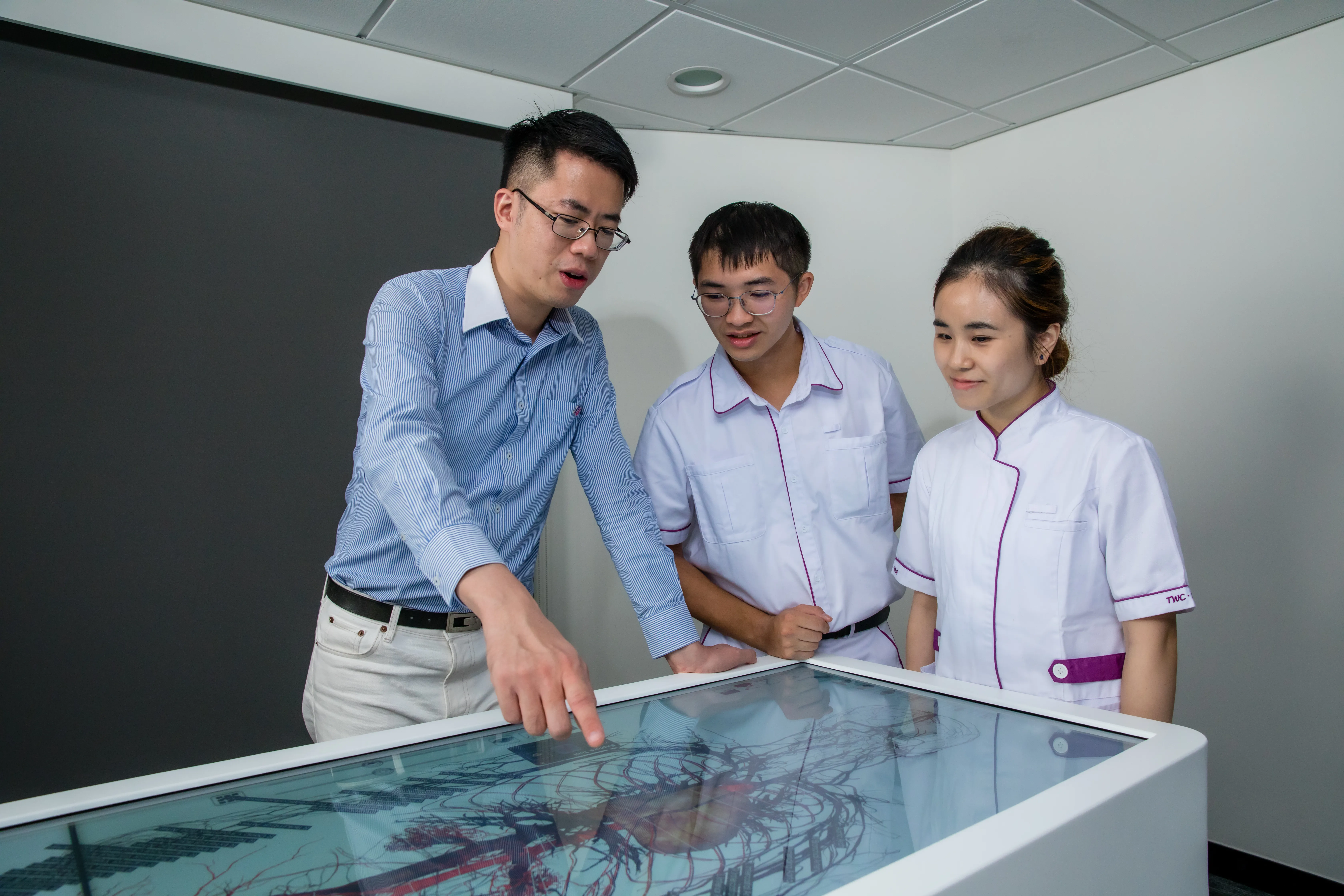
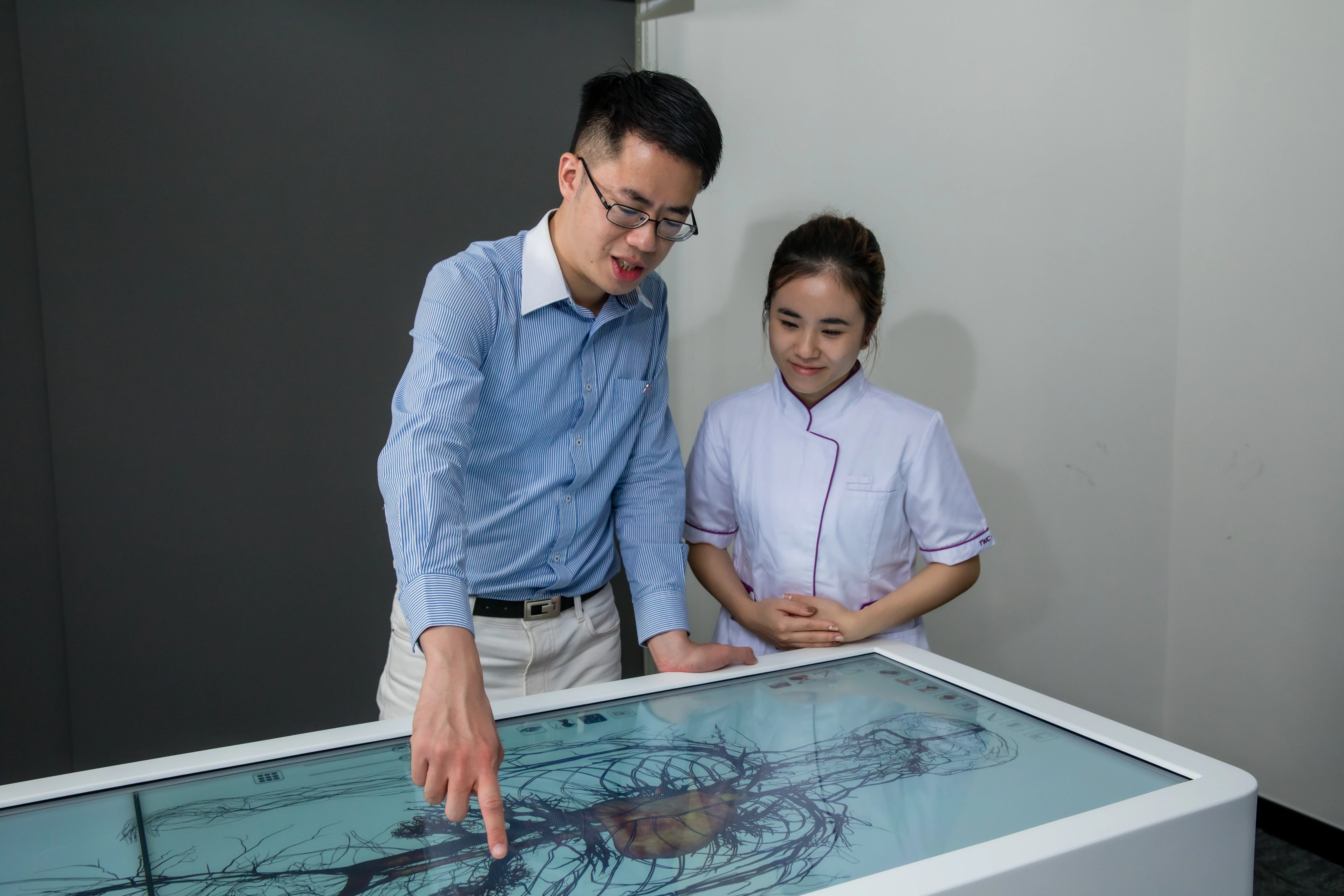
The Higher Diploma in Nursing (HD(N)) at Tung Wah College equips students with essential nursing knowledge, clinical skills and a strong sense of compassionate care. Through lectures, simulation training and extensive clinical placements, students are well prepared for frontline practice and become eligible to apply for enrolment as Enrolled Nurses in Hong Kong. Graduates should be employed as EN (General) in the welfare sector for a continuous period of no less than 3 years after satisfactory completion of the Programme. Graduates may also articulate to degree‑level studies, opening up pathways to diverse roles across the healthcare sector.
Programme Objectives
- To develop students’ competence in health promotion, maintenance and restoration, and prevention of illness through the delivery of primary, secondary and tertiary health care in hospital and community settings;
- To equip students with effective communication skills for providing individualized care and for fostering teamwork;
- To develop student’s understanding of psychosocial, cultural and environmental dimensions of health and illness;
- To equip students with critical, creative and analytical problem-solving skills; and
- To foster the development of students' general qualities for all-roundness, such as the capacity for lifelong learning, independent and reflective learning, and professionalism-related values.
Mode Of Study
| Mode Of Study | |
|---|---|
| Medium of instruction | English supplemented with Cantonese |
| Total no. of credits | 86 credits |
Programme Leader
Dr. Agnes YIP
Email: agnesyip@twc.edu.hk
- DHSc(N), School of Nursing, The Hong Kong Polytechnic University
- MScN, School of Nursing, The Hong Kong Polytechnic University
- BNurs, School of Nursing and Health Studies, Hong Kong Metropolitan University
- Fellowship of Hong Kong Academy of Nursing & Midwifery (Education)
- Registered Nurse (Hong Kong)
QF Information
| QF Information | |
|---|---|
| QF level | 4 |
| QR registration no. | 16/000348/L4 |
| Registration validity period | 01/09/2016 to 31/08/2028 |
Language Courses
| Language Courses |
|---|
| Applied Chinese Language (or Basic Chinese*) |
| Developing English Language Skills |
* Alternate Chinese course for “non-Chinese speaking” students only
Discipline Courses
| Discipline Courses |
|---|
| Care of Adults I |
| Communication in Healthcare Settings |
| Care of Adults II |
| Concepts of Health |
| Care of Adults III |
| Ethical and Legal Aspects of Health Care |
| Care of Adults IV |
| Fundamentals of Nursing I |
| Care of Children and Adolescents |
| Fundamentals of Nursing II |
| Care of Older Persons |
| Human Anatomy and Physiology |
| Care of Patients with Cronic Illness |
| Introduction to Research and Evidence-based Practice |
| Clinical Practicum I |
| Introduction to Specialty Nursing |
| Clinical Practicum II |
| Microbiology and Pharmacology |
| Clinical Practicum III |
| Professionalism and Contemporary Nursing |
General Education (GE) Courses
| General Education (GE) Courses |
|---|
| Understanding Human Behaviours Through Psychology and Sociology |
Remarks: The programme structure listed above is for reference only. For details, please consult the School concerned or refer to the Programme Definitive Document.
First Year Entry
The applicant must be:
- Aged 18 or above by the time the Training Programme commences;
- A Hong Kong permanent resident with the right of abode in Hong Kong;
AND
- (For HKDSE candidates from 2024/25 onwards) Have obtained Level 2 or above for Chinese Language, English Language and Mathematics and have “Attained (A)” for Citizenship and Social Development plus one Elective under Category A and Category B at Level 2 (“222A2”) in HKDSE; OR
- (For HKDSE candidates before 2024/2025) Have obtained Level 2 or above for Chinese Language, English Language, Mathematics and any two other subjects in Category A and B at Level 2 (“22222”) in HKDSE; OR
- Have completed secondary school Form 5 education in Hong Kong for applicants with Hong Kong Certificate of Education Examination (HKCEE) results; OR
- Have graduated from Diploma of Applied Education or Diploma Yi Jin and have successfully completed the Math Plus elective course; OR
- Having obtained an equivalent qualification*
# Priority will be accorded to applicants who have successfully completed the two-year Diploma Programme and obtained the diploma under the “Navigation Scheme for Young Persons in Care Services” (launched since 2015) or the “First-hire-then-train” Pilot Scheme (launched from 2013 to 2016) of the SWD or those who are currently working full time in non-governmental organisations or private organisations providing elderly, rehabilitation, family and child care, youth or correctional services, and who aspire to continue serving in the welfare sector as ENs after graduating from the Programme.
* The qualification must have fulfilled the minimum entry requirements for training of Enrolled Nurses as set by the NCHK.
The applicant selected for admission to the HD(N) Programme is required to sign an undertaking.
Each trainee will obtain full reimbursement of the tuition fees for the first normative 2-year study period of the Programme under the conditions below:
- To complete that Training Programme to the satisfaction of the Social Welfare Department and Tung Wah College;
- To be employed as Enrolled Nurse (General) in the welfare sector in Hong Kong for a continuous period of not less than three years after satisfactory completion of that Training Programme.
| Year | Tuition Fee (HK$) |
|---|---|
| Year 1 | $109,745 |
| Year 2 | $109,745 |
| Programme Total | $219,490 |
- Tung Wah College will adjust the tuition fee of its programmes based on the Composite Consumer Price Index to be announced by the Government annually.
- Tuition fees are normally charged by two instalments per annum and are payable before the commencement of each semester. New students are required to settle the balance of the tuition fee for the first semester (i.e. after deducting deposit) upon programme registration in August.
- Students are required to pay additional fees for all retake/additional courses which would be charged at the rate of the normal cohort and be calculated by the number of credits to be taken. Please refer the details in the College’s Fees Regulation at https://www.twc.edu.hk/en/Administration_Units/fo/our_service/student-area.
- Each trainee will obtain full reimbursement of the tuition fees for the first normative 2-year study period of the Programme on the conditions that the students complete that training programme to the satisfaction of the SWD and Tung Wah College; and to be employed as Enrolled Nurse (General) in the welfare sector in Hong Kong for a continuous period of not less than three years after satisfactory completion of that training programme.
- All fees paid are non-refundable and non-transferable.
- For more details about the College's tuition fee payment schedule and fees regulation, please refer to the "Tuition Fee Payment Schedule" and "Fees Regulation" at https://www.twc.edu.hk/en/Administration_Units/fo/our_service/student-area.
Professional Recognition
The programme is recognised by The Nursing Council in Hong Kong (NCHK) as a pre-enrolment nursing training programme. Graduates are eligible to apply for enrolment as Enrolled Nurses (EN) “登記護士” under the Nurses Registration Ordinance (Cap 164) of Hong Kong.
Career Prospects and Further Studies
- Trainees are required to sign an undertaking to work as Enrolled Nurse (General) in non-governmental or private organisations providing elderly, rehabilitation, family and child care, or correctional services recognized by the SWD for a continuous period of no less than three years after completion of the training.
- Qualified ENs can become case managers if they are employed in the elderly care and rehabilitation services.
Oath Ceremony
We pledge professionalism, pride, unity and lifelong belonging together. At the ceremony, students publicly affirmed their ethical commitments, pledged to uphold nursing standards and celebrated the strength of their learning community. The event deepened their sense of professional identity, responsibility and mutual support, inspiring a shared dedication to patient care and lifelong learning within the HD(N) cohort.
Drop Board and time capsule
Students sign, track progress, and encourage each other together. A shared board gathers students’ signatures and study timelines, celebrating milestones. Progress fuels resilience and teamwork, reminding everyone to persevere, support peers, and advance step by step toward nursing goals.
Support Forum
Students find guidance and answers in HD(N) Support Forum sessions. Sessions help navigate coursework, offer experienced teacher guidance, and answer fundamentals. Over 97% recommend them to Year 1 nursing students.
What are the differences between Bachelor of Health Science (Hons) in Nursing and Higher Diploma in Nursing at TWC?
The Bachelor of Health Science (Hons) in Nursing has a minimum requirement of DSE result 3322+2, is subsidised under the Study Subsidy Scheme for Designated Professions/Sectors (SSSDP) and is a 5-year programme with 1480 hours clinical practicum. The Higher Diploma in Nursing has a minimum requirement of DSE results 222+22, is subsidised by the Social Welfare Department, is a 2-year programme with 1600 hours clinical practicum, and includes clinical placements in residential or community settings. Graduates of the Bachelor will obtain RN licensure, whereas graduates of the Higher Diploma will obtain EN licensure.
Will there be any supervision in all clinical practicums?
Yes. Students will be under supervision in all clinical practicums. In the first clinical practicum, students will be supervised by College academic staff and in subsequent practicums by experienced clinical mentors to help them learn hands-on skills and apply knowledge in real clinical settings.
Do I need to work shifts like other nurses in the hospitals?
Yes. According to Nursing Council of Hong Kong requirements, students must fulfill 1600 hours including night shifts over the 2-year study period, and are required to work shifts (morning, afternoon, and night) based on clinical venue operations.
What are the career prospects after I have completed the Programme?
HD(N) (SWD) graduates will be qualified to apply for the professional license of EN recognised by the NCHK, can be employed in community and residential care settings, may become case managers if employed in elderly care and rehabilitation services, and must undertake employment in the welfare sector for a continuous period of no less than 3 years after satisfactory completion of the training.
What is special in your HD(N) programme when comparing with other similar programmes?
The HD(N) programme is designed to impart professional nursing knowledge and skills needed to deliver healthcare services for clients in both hospitals and residential care/community settings, with opportunities to practise in a variety of settings.
After I have completed this Programme, are there any opportunities to further my studies?
Yes. Upon fulfilling employment requirements in the welfare sector after completing the Programme, students may consider further study in the Bachelor of Health Science (Hons) in Nursing (senior year entry) for RN licensure at the College or pursue similar programmes locally or overseas.