
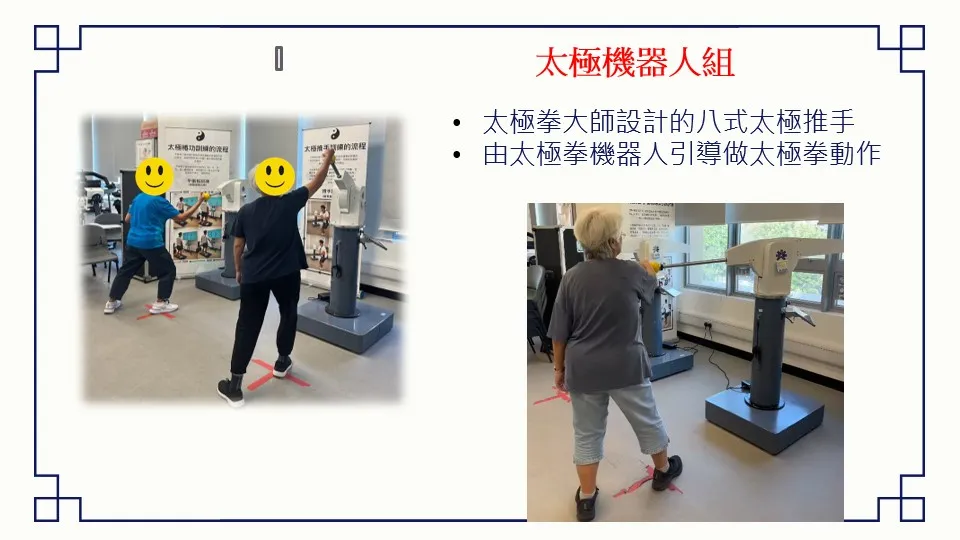
This study aims to evaluate the training effects of Tai Chi Robotic Machine versus traditional Tai Chi Master classes on improving balance and preventing fall for older people aged 60 or above. The null hypothesis is that “there is no difference in the training effects between the Tai Chi Robotic Machine and the traditional Tai Chi Master Classes”.
The objectives of the study are as follows:
- Primary Objective:
To investigate the feasibility of using Tai Chi Robotic Machine as alternative to Tai Chi Master in offering Tai Chi training to older adults - Secondary Objective:
To evaluate the training effect of Tai Chi on improving balance, pain, joint range, strength, general health and lowering fall risk in older adults, comparing with control group
Participants are required to have 3 sessions/week for 4 weeks, i.e. 12 sessions in total, to conduct assessment and intervention.
Assessment will be conducted before, immediately after and one month after 4 weeks of Tai Chi training program.
All three groups, 1. Tai Chi Robotic Machine group 2. Tai Chi Master group 3. Control group will be given an education leaflet on fall prevention measures, including life habits, diet and nutrition, home modification and fall prevention exercise i.e. strengthening and balance exercise.