
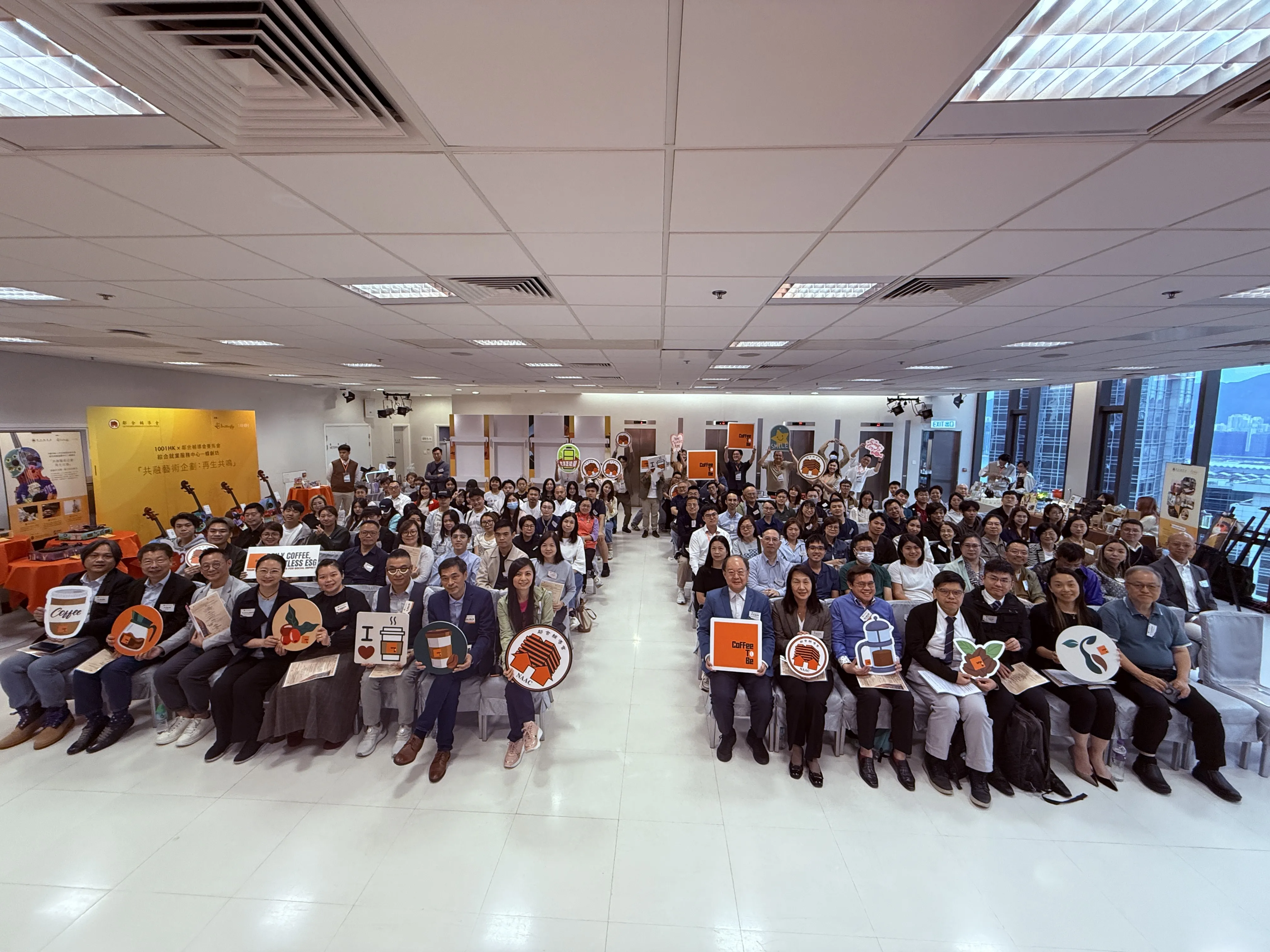
The Neighbourhood Advice‑Action Council (NAAC) sought a rigorous assessment of three innovative coffee‑based social intervention programmes: Coffee Bunnies, a social enterprise café in Tai Hang employing and training youth as baristas; Coffee Bean Guardian in Tung Chung; and I Can Café in Tuen Mun, both rehabilitation initiatives engaging individuals with different abilities in coffee production, brewing and retail. Using coffee as a shared platform, these programmes create structured training and employment pathways for vulnerable groups and promote genuine social inclusion.
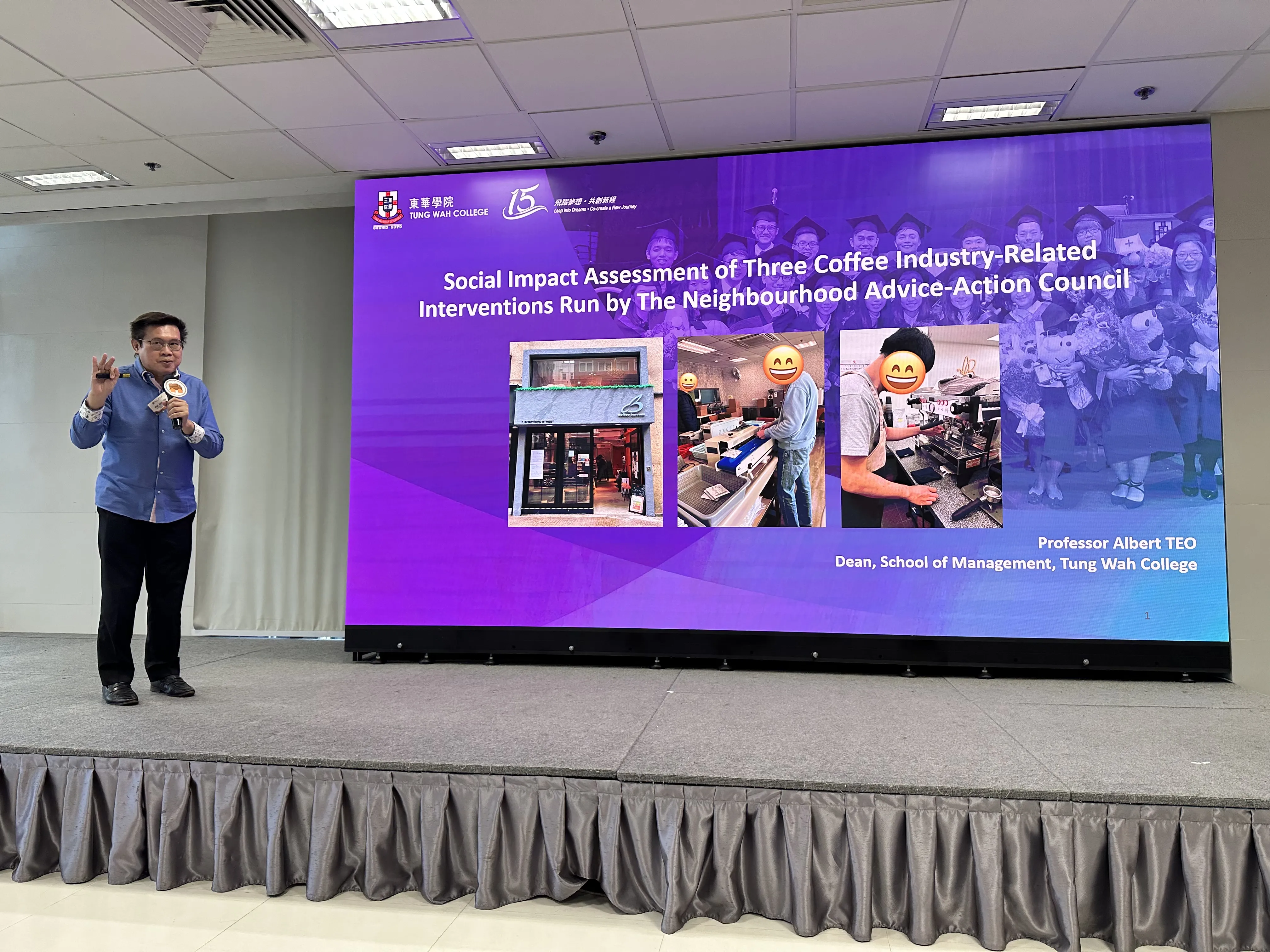
NAAC commissioned Professor Albert Teo and his research team to evaluate the social impact of these initiatives. Drawing on systematic empirical data, the team developed a theory of change for each programme and conducted a Social Return on Investment (SROI) analysis to quantify the social value generated for key stakeholders.
The findings showed substantial and multi‑dimensional benefits. At Coffee Bunnies, youth employees not only improved their financial circumstances, but also developed vocational and communication skills, greater self‑discipline and self‑confidence, stronger family relationships and a clear sense of achievement. At Coffee Bean Guardian and I Can Café, members with different abilities reported increased happiness and emotional well‑being, reduced stress, improved self‑confidence and the acquisition of practical work skills that support long‑term employability and community participation.
The programmes also created positive outcomes for secondary stakeholders. Customers of Coffee Bunnies gained a better understanding of social enterprises and a more empathetic view of youth. Parents and caregivers of members at Coffee Bean Guardian and I Can Café experienced reduced stress, improved family relationships and a more balanced life.
Across all three programmes, the SROI ratios were significantly greater than 1.0, indicating that every dollar invested generated social value well above its cost. This confirms the NAAC initiatives as cost‑effective, high‑impact models for youth development, vocational rehabilitation and community inclusion. The project was funded by the Research Matching Grant Scheme of the University Grants Committee, underscoring its academic and societal importance.