This programme delves into developmental stages for ages 0-8, encompassing pedagogy and educational psychology, while offering interdisciplinary learning experiences. The College features early childhood laboratory play activities to support holistic development and diverse needs. It also emphasizes quality educare skills for infants 0-3, empowering graduates to pursue careers across all stages of early childhood education.

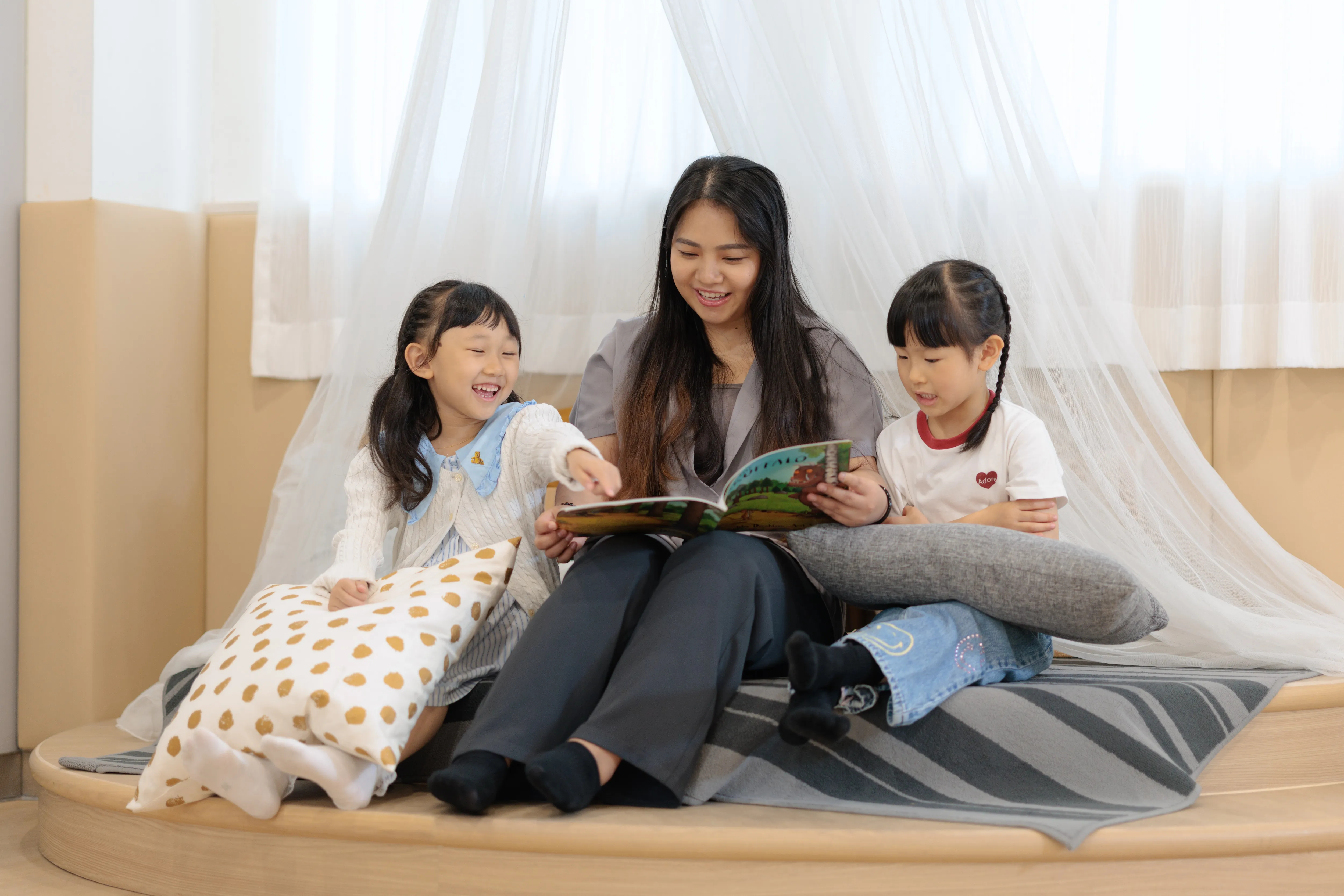

Bachelor of Education (Honours) in Early Childhood Education
Programme Description
Embark on a transformative journey in early childhood education through our BEd (ECE) programme, designed to prepare you into reflective educators and champions of superior child care. We prioritize a comprehensive, child-centered approach alongside strong family collaborations. You will hone essential skills in curriculum innovation, inclusive educaiton strategies, and insightful developmental assessments. By seamlessly blending theoretical insights with hands-on, practical experiences, we empower you to thrive as professionals in varied early childhood environments, ready to make a meaningful impact.
Programme Objectives
- To utilise critical thinking in constructing arguments about contemporary issues in early childhood education;
- To apply knowledge and skills to various childcare or early childhood educational settings;
- To design curriculum which suit the diverse learning and/or developmental needs of children across the changing socio-economic and educational environment;
- To demonstrate competence in integrating knowledge and skills to work with children with diverse needs in early childhood education and their families;
- To demonstrate competence to undertake independent fieldwork across different childcare or early childhood educational settings; and
- To illustrate leadership across various childcare or early childhood educational settings.
Mode Of Study
| Mode of study | |
|---|---|
| Medium of instruction | English |
| Total no. of credits | 135 credits |
Programme Leader
Dr. Cathy HUNG PhD
Email: cathyhung@twc.edu.hk
- PhD, The University of Hong Kong Graduate
- Diploma in Early Childhood Education, Royal Melbourne Institute of Technology
- Diploma in Special Education Needs, The University of Hong Kong
- MEd in Psychology of Education, University of Bristol
- BSSc (Hons.) in Psychology, City University of Hong Kong
QF Information
| QF Information | |
|---|---|
| QF level | 5 |
| QR registration no. | 18/000006/L5 |
| Registration validity period | 01/09/2018 to 31/08/2027 |
Entrance Scholarships
Please click here for details.
Language Courses
| Language Courses |
|---|
| Advanced English Writing Skills |
| Enhancing Academic English Skills |
| Applied Chinese Language (or Basic Chinese)* |
| English for Early Childhood Education |
| Developing English Language Skills |
| Putonghua |
* Alternate Chinese course for “non-Chinese speaking” students only
Discipline Courses
| Discipline Courses |
|---|
| Capstone Project for Early Childhood Education |
| Interdisciplinary Intervention for Children with Diverse Needs |
| Child Development |
| Introduction to Assessment for Children’s Learning |
| Contemporary Approaches in Early Childhood Education |
| Introduction to Children with Diverse Needs |
| Curriculum Evaluation |
| Involvement with Parents in Early Childhood Settings |
| Infant Care, Safety and Health |
| Issues in Early Childhood Education |
| Drawing the Potentials of Children with Cognitive and Language Needs |
| Language and Literacy in Early Childhood Education |
| Drawing the Potentials of Children with Physical and Sensory Needs |
| Learning through Play |
| Drawing the Potentials of Children with Social and Emotional Needs |
| Mathematics and Nature Science in Early Childhood Curriculum |
| Early Childhood Curriculum Design, Implementation and Evaluation |
| Play and Art Therapy |
| Educational Management in Early Childhood Settings |
| Practicum I |
| Effective Leadership in Diverse Early Childhood Settings |
| Practicum II |
| Exposure of English for Young Children |
| Practicum III |
| Expressive Arts, Music and Movement |
| Principles and Strategies for Supporting Children with Diverse Needs |
| Family and Culture |
| Research Methods in Early Childhood Education |
| Foundations of Early Childhood Education |
| Rethinking Professionalism in Ever Changing Society |
| Global Perspectives on Theories and Practices of Children with Diverse Needs |
| Educational Psychology |
General Education Courses
| General Education Courses |
|---|
| Information Technology and Multimedia Applications |
| The Development and Operation of Non-profit Organizations |
| Psychology in Everyday Life |
| + Select 3 elective courses from the College’s GE course list, in which 2 courses at QF5 |
Remarks: The programme structure listed above is for reference only. For details, please consult the School concerned or refer to the Programme Definitive Document.
Year 1 Entry
For Year 1 entry, applicants should meet one of the following requirements:
- (HKDSE candidates from 2024/25 onwards) Have obtained Level 3 for Chinese Language and English Language and Level 2 for Mathematics and have “Attained (A)” for Citizenship and Social Development plus one Elective/Applied Learning subject at Level 2 (“332A+2”) in HKDSE; OR
- (HKDSE candidates before 2024/2025) Have obtained Level 3 for Chinese Language and English Language and Level 2 for Mathematics and Liberal Studies plus one Elective/Applied Learning subject at Level 2 (“3322+2”) in HKDSE; OR
- Have passes in AS Use of English and AS Chinese Language and Culture plus one AL subject/two AS subjects in HKALE and Level 2 for Chinese Language and English Language plus passes in three other subjects in HKCEE; OR
- Have obtained the International Baccalaureate (IB) Diploma with a minimum score of 24 and fulfilled the English language requirements:
- English A: Language and Literature (Higher or Standard Level) – Grade 4; or
- English A: Literature (Higher or Standard Level) – Grade 4; or
- English B (Higher Level) – Grade 4; or
- English B (Standard Level) – Grade 5; or
- English Literature and Performance (Standard Level) – Grade 4; or
- English Text and Performance (Standard Level) – Grade 4; OR
- Have met the 2nd cut-off line(1) of the respective province for admission to mainland key universities in the National College Entrance Examination (Gaokao) / Joint Entrance Examination for Universities in PRC (JEE, PRC) and the scores of English Language is over 100 (全國普通高等學校招生入學考試(內地高考)/ 港澳台僑聯招試達到所屬省市報讀第二批重點高校分數線(1)以上及英語科達100分或以上); OR
- Have obtained equivalent qualifications(2).
Notes:
- Or the “cut-off line for undergraduate studies” (for provinces and cities where the 1st and 2nd cut-off lines are combined) 或「本科批次」分數線(適用於「本科一批」及「本科二批」合拼為「本科批次」的省市)
- Please refer to the College’s website for examples of equivalent non-local qualifications for admission to bachelor’s degree programmes.
Senior Year Entry
For Senior Year entry, applicants should meet one of the following requirements:
- Satisfactory completion of a recognised or equivalent Higher Diploma (HD) / Certificate Programme in Early Childhood Education; OR
- Have obtained equivalent qualifications.
First Year Entry
| Year | Tuition Fee (HK$) (without subsidy) | Tuition Fee (HK$) (with subsidy) |
|---|---|---|
| Year 1 | $70,580 | $35,460 |
| Year 2 | $70,580 | $35,460 |
| Year 3 | $79,910 | $44,790 |
| Year 4 | $79,910 | $44,790 |
| Programme Total | $300,980 | $160,500 |
Senior Year Entry
| Year | Tuition Fee (HK$) | ||
|---|---|---|---|
| Full-time (without subsidy) | Full-time (with subsidy) | Part-time (without subsidy) | |
| Year 1 | $79,910 | $44,790 | $39,955 |
| Year 2 | $79,910 | $44,790 | $39,955 |
| Year 3 | N/A | N/A | $39,955 |
| Year 4 | N/A | N/A | $39,955 |
| Programme Total | $159,820 | $89,580 | $159,820 |
Notes
- Tung Wah College will adjust the tuition fee of its programmes based on the Composite Consumer Price Index to be announced by the Government annually.
- Tuition fees are normally charged by two instalments per annum and are payable before the commencement of each semester. New students are required to settle the balance of the tuition fee for the first semester (i.e. after deducting deposit) upon programme registration in August.
- Students are required to pay additional fees for all retake/additional courses which would be charged at the rate of the normal cohort and be calculated by the number of credits to be taken. Please refer the details in the College’s Fees Regulation at https://www.twc.edu.hk/en/Administration_Units/fo/our_service/student-area.
- This represents the programme fee after deduction of subsidy of the Non-means-tested Subsidy Scheme for Self-financing Undergraduate Studies in Hong Kong (NMTSS). In 2025/2026 academic year, the annual subsidy is $35,120. The annual subsidy amount may vary in each academic year subject to the decision by the Education Bureau.
- All fees paid are non-refundable and non-transferable.
- Following the Government's announcement on 31 July 2025 regarding the revised eligibility criteria for government-subsidised post-secondary student places and subsidies, the new arrangements will take effect from the 2027/28 academic year (with the application cycle commencing in October 2026). Students will be required to pay the non-subsidised tuition fees if they do not meet the updated eligibility criteria for government subsidies.
- For more details about the College's tuition fee payment schedule and fees regulation, please refer to the "Tuition Fee Payment Schedule" and "Fees Regulation" at "https://www.twc.edu.hk/en/Administration_Units/fo/our_service/student-area".
Professional Recognition
- Graduates are recognised by the Education Bureau as meeting the requirement for registration as Qualified Kindergarten Teachers under the Education Ordinance.
- Graduates are also eligible for registration as Child Care Workers, Child Care Supervisors and Special Child Care Workers under the Child Care Services Ordinance of the Social Welfare Department (SWD).
Career Prospects and Further Studies
- Graduates can register as qualified kindergarten teachers in great demand in various early childhood settings which include crèche, nursery cum kindergarten, kindergarten, international school and special childcare centre etc.
- Graduates are capable of serving in various early childhood settings in Hong Kong.
- Graduates are also able to articulate to postgraduate programmes in early childhood education or similar disciplines at other local and overseas education institutions.
Graduate Profile and Employment Pathway
Please click Graduate Profile and Employment Pathway for details.
Inter-disciplinary learning experience
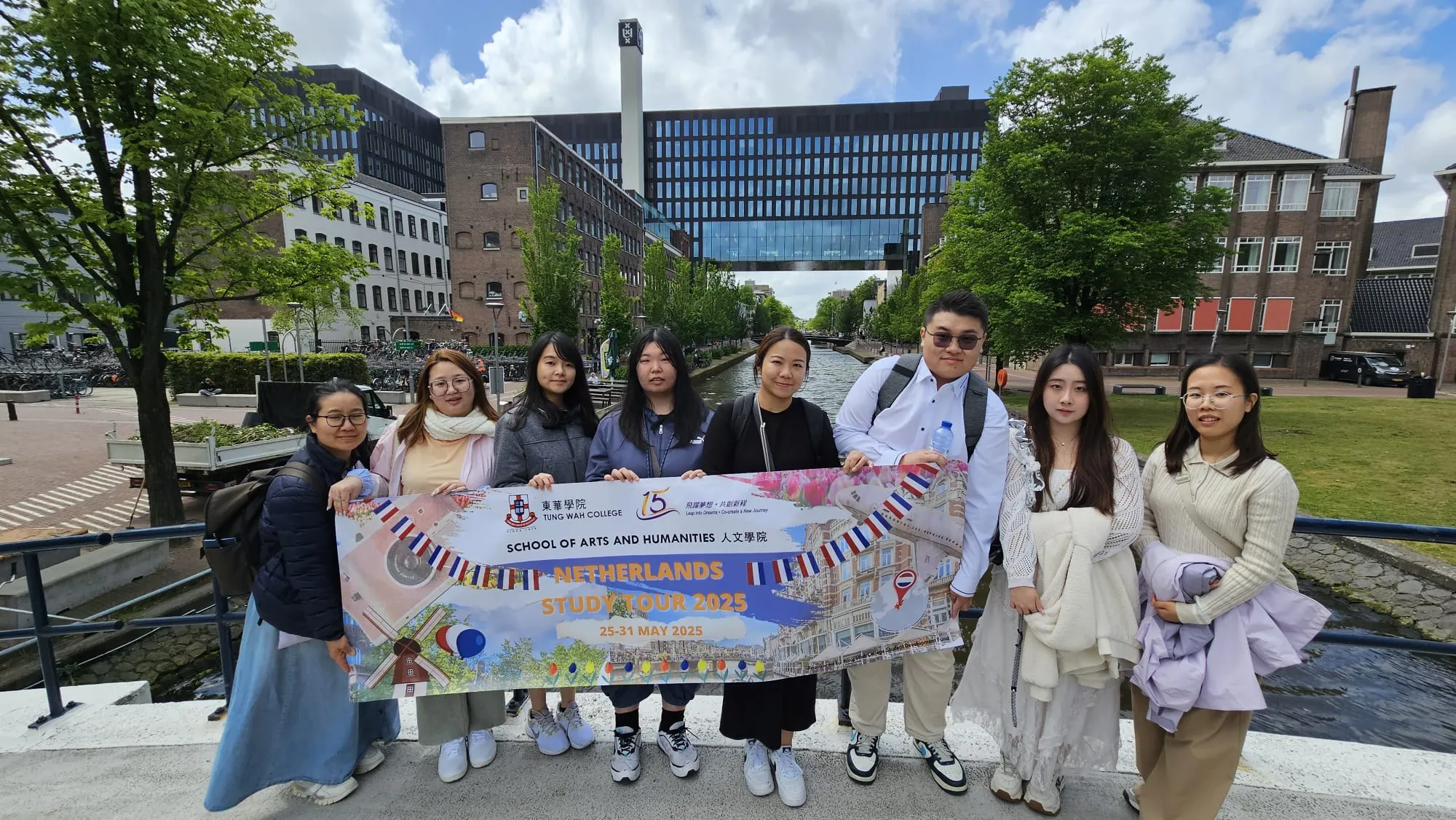
A study tour to the Netherlands was organized in May 2025, during which participants visited kindergartens, apartment for life, and dementia-friendly communities. The tour focused on interprofessional education across the lifespan and fostered understanding of cross-generational collaboration.
Practical educare learning experience for children aged 0-3
A one-week school attachment focusing on children aged 0-3 years at childcare centers has been included in the BEd(ECE) programme (Year 4).
Industrial based mentorship programme
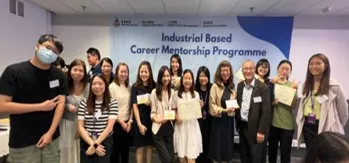
The Student Affairs Office (SAO) had collaborated with schools to organize the TWC Industrial Based Career Mentorship Programme, which aimed to provide undergraduate students with opportunities to develop professional competencies, professional knowledge, and practical skills through mentorship by experienced practitioners. Selected industry experts would offer students valuable networks and real-world insights.
What will I learn in early childhood education programme?
This programme aims to prepare students for professional careers in early childhood settings. Students will learn the theory and pedagogy of Early Childhood Education to meet the needs of caring and educating for young children (0 to 8 years of age).
What are the special features of TWC’s Bachelor of Education (Honours) in Early Childhood Education?
A wide range of teaching methods will be used, including workshops, school visits, seminars, discussions and practicum. In particular, practicum provides an opportunity for students to apply theory to practice. Through school attachment, educational visits and block practice placement in different early childhood sectors, students are facilitated to acquire, refine and demonstrate the skills required of competent beginning teachers. Education for children with Special Education Need (SEN) is another unique feature of the Programme. Some specialised courses are included in the curriculum. Teaching staff with expertise in relevant disciplines such as Occupational Therapy, Psychology and Language will be involved in the design and teaching of courses in SEN. Exposure to research, as a consumer of practical knowledge and experimenter of research activities, is an anticipated feature of the Programme.
Is this programme accredited by the government and professionally recognised?
The programme is validated for a degree qualification (Level 5) by the Hong Kong Council for Accreditation of Academic and Vocational Qualifications (HKCAAVQ). Graduates are eligible for registration as Qualified Kindergarten Teachers (QKT) with the Education Bureau (EDB); and Child Care Workers (CCW) and Child Care Supervisors (CCS) with the Social Welfare Department (SWD). Besides, graduates can serve as Special Child Care Workers (SCCW).
What are the career prospect and articulation pathways for this programme?
Kindergarten teachers are in great demand in various early childhood settings, which include Crèche, Nursery Cum Kindergarten, Kindergarten, International School, Special Child Care Centre, etc. Graduates are capable of serving in various early childhood settings in Hong Kong. Graduates are able to articulate to postgraduate programmes in early childhood education or similar disciplines at other local and overseas tertiary educational institutes.